One of the newer entries into the fitness realm, is online training. In a nutshell, this is working with a personal trainer remotely using various online tools/apps, which allows for some very unique benefits.
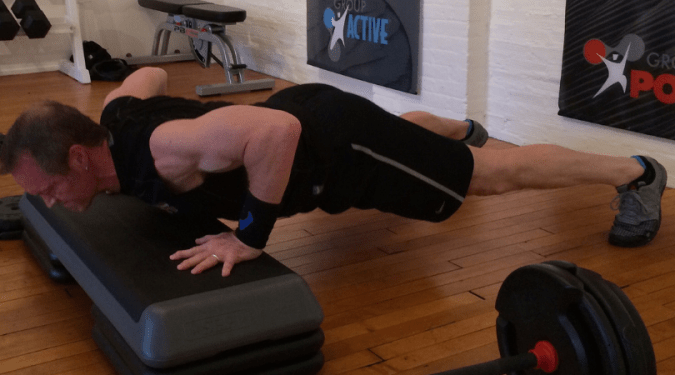
Mark Nutting, being video recorded while demonstrating a bench push up for an online client.
The benefits of working with a personal trainer online include:
- Working out when you want (It’s your schedule. Fit the workouts in when you choose)
- Working out where you want (your home, office, or at the beach)
- Being able to work with high quality trainers no matter where you live.
- No special equipment required. Most online trainers will work with whatever equipment you have access to, or, just using bodyweight
- Able to work out in the privacy of your own space (No need to feel intimidated at the gym)
- You have someone to keep you accountable
- You have someone in your corner cheering you on without judgement
- The cost is less than using a personal trainer in a face-to-face session
Of course, there are challenges as well:
- If you are not using video tools (such as Skype), where your trainer can watch your every movement, you won’t be getting the same kind of attention as you would in-person training.
- You need to make sure your trainer is reputable. You can’t simply watch work them with others as you could at a health club. Check out their credentials.
- You have to be pretty self-motivated and get your “homework” done. The best program in the world won’t help if you don’t do the work.
- Make sure there is a refund policy.
So, as you think about getting started in a fitness program, or if you’re moving away the accessibility of in-person trainers, or if you just want the convenience, an online personal training may be for you. It’s one more way to get healthier and more fit.
Note: Because online training is another great way to help others change their lives for the better, Men’s Fitness After 50 is now offering an online training program. For details, click here: Men’s Fitness After 50 online training program
 Remember that movement plays into our health in so many ways. When moving is challenging for us, we tend to move less, and then it gets even more challenging, and then we move even less, and then…. You see the spiral.
 What is important to note is that with each passing year that you do nothing physical, you lose more ground on what you are capable of doing. Yet, even with the decreased abilities of a sedentary life, there are still no exercises that you should not do because of your age. What you do have to do is change how you start to do that exercise.