Free Weights, Machines, Tubing, or Body Weight?

Should your resistance workout include free weights, machines, tubing, or body weight exercises? The answer is “yes!” It should and could include any or all of those various resistance training forms. The choice you make depends on a few things. These include what you are training for (your goals), what equipment do you have access to, and what have you been using (variety is the spice of life). Let’s talk about what each has to offer.

First, let me note that all are means of adding resistance to movement and, in doing that, have the potential to build muscle size, strength, and endurance depending on the repetition range and volume (a post for a later time). Yes, you can body build with tubing alone. Your muscles don’t know what form of resistance you are using. They only know, “Is it hard?” and if it is, your muscles will adapt.
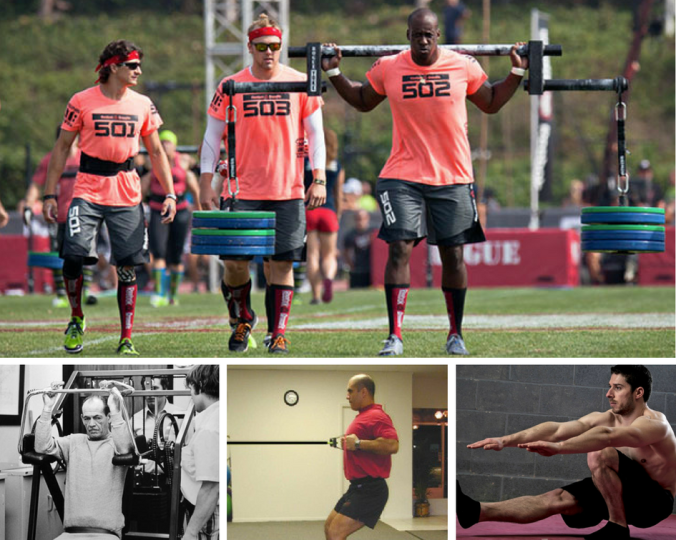
designFree weights (a constant, external weight) have been around forever. Anything we grab and lift is a free weight. There are many physical professions that produce strong people because they lift heavy things as part of the job. In fact, some of the strong man/woman challenges are taken from these, such as the farmer’s walk and yoke carry. One of the major benefits of lifting free weights is that can replicate the demands that we face in our activities of daily living (ADL). This is typically what is called functional training. Lifting with free weights can make you deal with balance, stability, and gravity in a similar way as lifting something in “real life”.

Machines typically have a pin selected weight stack, seats that need to be adjusted to fit your body, and handles that you either pull or push. The good and the bad? Changing weights are quick and easy. Machines support your body weight so you don’t need to. This makes it less like activities of daily living. However, that support can also allow you to work around injuries and not all exercises need to be directly related to ADL. Additionally, most machines offer variable resistance. Where free weights are always the same (a 10lb dumbbell is always 10lbs), through the use of different shaped cams, machines can increase and decrease the resistance. This helps you to work through “sticking points” to maximize resistance within a full range of motion.

Tubing (elastic tension) offers the advantages of being highly portable, very versatile, and simple to change the direction of force (up, down, horizontal, etc.) by changing the anchor point. It can provide significant resistance both by changing to a heavier gauge tubing or by simply moving further away from the anchor point. The biggest downside to tubing is that you are never sure how much resistance you are using. This makes replicating the tension, from one workout to the next, challenging. Without that measurable progress marker, some people may not be as motivated.

Finally, there is body weight exercise. Using your body weight (BW) is certainly functional, we have to move our bodies around all day long. No external equipment is needed, so it’s a handy portable workout. There’s also an ego advantage. Who doesn’t like the idea of being able to handle their own BW. Push ups, pull ups, and dips are long time fitness standards. We can’t alter our weight, though, to suit the exercise. I watch some guys crank out pull ups and have to note, “Well, you only weigh 150. Try that at my weight (212 as of yesterday, btw).” Sometimes your BW is not enough. BW squats, if challenging now, will rapidly become too easy. You need to be creative to give the whole body the right amount of resistance. (See push up progression here)

So, when the question of which mode of resistance training is best for you arises, you know the answer is “It depends”. What tools are available, what is your goal, what things do you like doing? The important thing to note is that all of these can provide very effective workouts and your body will not respond differently because of the type of resistance you use.
Keeping Your Brain Fit

As we age, there are changes that occur that we typically expect to face. These might include some hearing loss, impaired vision, and general aches and pains. These are annoyances for the most part and not things that need to diminish our quality of life to any great extent. However, for many, a big fear and source of anxiety is the possibility of suffering from Alzheimer’s or some other form of dementia. Alzheimer’s is the sixth leading cause of death in the US and the second most feared (after cancer). Who could blame fearing it? It can rob us of our memory to the extent that we don’t remember our loved ones, and, to date, there is no cure for it. That said, there are things we can do to keep our brains as healthy as possible for as long as possible. Brain fitness programs have been explored to help people maintain healthy brain tissue and function.
fit_brainThere are five main elements that we can engage in to help our brains working optimally.

  1. Physical exercise has been shown to improve blood flow to the brain, as well as stimulate the production of brain derived neurotropic factor (BDNF) which has been described as “Miracle Grow for the brain”.
  2. Proper nutrition, healthy foods in healthy amounts (especially those high in omega 3 and antioxidants) helps to keep the brain’s tissues functioning optimally.brainfitness-elements
  3. Cognitive challenge is essential and more than just doing crossword puzzles and Sudoku. Look for learning opportunities that involve multiple senses such as learning to play an instrument or learning to speak another language.
  4. Stress management can have a big effect on our lives. Stress elevates cortisol levels (stress hormone) which, if it is chronic, can destroy brain cells making it harder to remember and think clearly. Try activities that can reduce stress such as exercise, meditation, or other things that draw your attention away from your stressors.
  5. Socialization is also important. Studies have shown that people with many social connections, that they interact with on a regular basis, experience a slower rate of memory decline.

These elements of a brain fitness program don’t need to be addressed separately. In fact, one of the best things you can do is to layer various elements together. Fitness classes are a great example of the possible layering, exercise, cognitive (following and/or learning choreography), stress reduction, and socialization with others in the class. Another example could be taking an Italian cooking class where you also learn Italian (cognitive, socialization, possibly nutrition). As I think about it, there’s a very popular one at the moment, the social painting classes (socialization, cognitive, stress reduction).

We can make a difference in our brain’s health and function. The mind is a terrible thing to waste. (I think I heard that someplace 🙂 ) Don’t let yourself slide into mental decline if it can be prevented or even delayed. Try to integrate these 5 elements into your life. Mix and match them. They are what make life richer and help keep it that way.


Got Back Pain?

In all likelihood you have experienced back pain at some point in your life, especially if you are over 50. Here are a few quick facts about back pain:

  • Low back pain is the single leading cause of disability worldwide.
  • One-half of all working Americans admit to having back pain symptoms each year.
  • Back pain is one of the most common reasons for missed work.
  • 80% of the population will experience a back problem at some time in their lives.
  • Americans spend at least $50 billion each year on back pain

backpain

According to the Mayo Clinic, risk factors for back pain include:

  • Age. Back pain is more common as you get older.
  • Lack of exercise. Weak back and core muscles can lead to back pain.
  • Excess body weight puts extra stress on your back.
  • Diseases. Some types of arthritis and cancer can contribute to back pain.
  • Improper lifting techniques can lead to back pain.
  • Smoking can keep your body from delivering enough nutrients to the disks in your back.

So, where do we start to reduce back pain? See your doctor first! Get a diagnoses to establish if there is any risk to starting a core strengthening program. (Yes, the core is where your training should begin.)

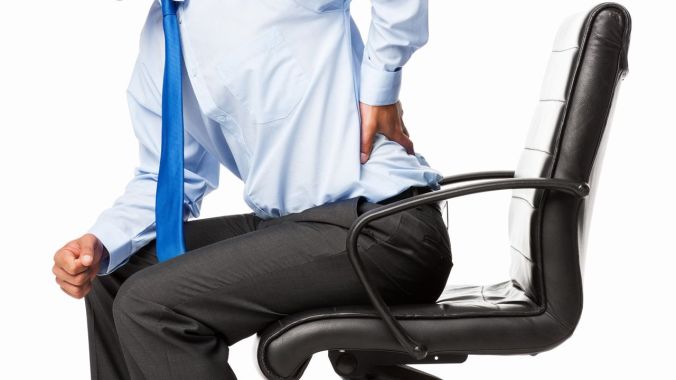
The first exercise for most individuals (everyone’s case is different) is to learn and practice core bracing. This is where you draw in the waist as if you are trying to fasten pants that are a bit too tight. This girdling creates pressure inside the abdomen which, in turn, supports the low back. Because this exercise supports the back and doesn’t bend and/or rotate the spine, it can usually be done with no harm to the back. You need to practice this to both strengthen the core muscles and to be able to call on that strength when needed.

In my experience, one of the best ways to “find” this bracing is to sit on the edge of a chair and then, while keeping your face straight forward, push the top of your head toward the ceiling. I call these “sit-talls” because that’s what you’re trying to do, sit as tall as you can. In order to be tall, you need to lengthen your spine. To do that, you need to draw in your navel toward your spine and that is the core bracing.

Once you learn what bracing is and how to do it, other static (non-movement) exercises can be incorporated to get you started on the road to better back function with less discomfort.

Let me know if you have any questions.

Mark


How Many Years Do You Have Left?

As a personal trainer, I’ll ask clients what their goals are and occasionally I get an answer like, “At my age, I’ll be happy if I can just go up and down the stairs without getting winded.” Then I’ll look back down at their medical history and see that they are only 52. This always prompts me to ask, “How many years do you think you have left?” Usually they will say they hope to live into their 80’s or 90’s. Well that’s thirty to forty years to go. What are those years going to look like? Are you going to spend twenty years in a walker or a wheelchair? That doesn’t sound like much fun. Just because we’ve hit 50 (or 60, or 70…) doesn’t suddenly mean that we are done, that we are no longer physical beings.

The truth is that we have been conditioned by what has come before. In our parents era, it was believed that we would lose a certain % of our muscle and flexibility and gain a certain % of fat every decade beyond our twenties. Pretty depressing. Well, the truth is that we would see those declines when we slowed down and didn’t continue to challenge ourselves physically. Think about it. We finished playing our sports in high school and college, got a 9-5 job, got home after work and just wanted to relax. As we did less, we are able to do less. It truly is “use it or lose it.” The good news is that most of what we saw as age related declines (also called sarcopenia) were because of the activity decreases and that does not need to be our fate. Whether you have been on that downward slope or just want to make sure you stay off that path as long as you can, the right exercises and diet can keep you fit and able to do what you want well into our final years.

Back to the original question, how many years do you have left? Here’s the follow up question, of those years, how many of them would you like to still be able to do what you want and enjoy? You can choose how you want those years to play out. Don’t settle for climbing stairs when you can climb mountains.

untitled-design-8