Maybe you have your workout routine down. You’ve been doing it for years and it seems to be working fine. Maybe you’d like to be a little leaner or have a little more muscle, but, for “your age” you feel okay about where you are. I hear that fairly frequently, “I’m doing okay, getting my workouts in.” My reply is always, “Are you where you hoped you’d be?” The answer is usually, “No.”
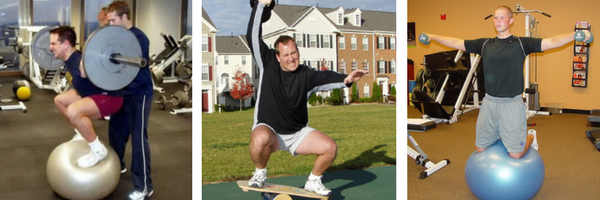
 One of the major problems with doing the same thing that you’ve always done is that it might not be applicable any more. Maybe it’s outdated because more research has come out in exercise science to show that what we used to believe, no longer holds true. i.e. we used to believe that weight machines were the best way to train and gyms packed machines in every square inch. Now we know that training movements with body weight/free weights, where we have to balance and stabilize, offer more benefit in sports and everyday function.
Another reason your program might be outdated is that our needs change through the years and our current needs may be different for those we had years back. While you may have been focused on just being lean and mean in the past, now, you may have much more specific goals, such as trying to better your balance, mobility, and stamina.
In continually doing the same program, we also limit the benefits we could be receiving. By varying our exercises, exercise volume, intensities, repetitions, rest periods, etc. we get greater and better rounded results. A structured, regular change in these variables is called periodization.
Finally, change, in this case learning new physical programs and movements, has brain health benefits. As we are taught a new movement, we both have to understand what it is and we have to get our body to move in that new way. Two of the pillars of brain maintenance are mental stimulation and physical exercise.
So, in spite of feeling “fine” about your routine, it’s probably time to reassess. The benefits of having a new program with new challenges can make a huge difference in the results you get. You’re never too old to learn a few new tricks.
 Here are some sources that I looked through for an answer.


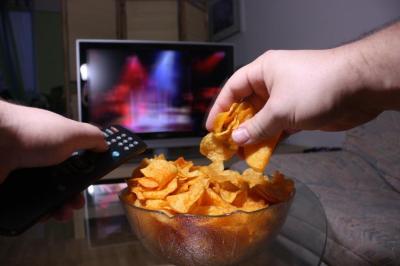
 If you are hungry, stop what you are doing. Turn your TV off or leave the room or your desk. Get the food you want. Take the time to enjoy the food and think of it as an eating meditation. Experience it. Look at it, smell it, place it in your mouth, notice the texture, the feel. How does it taste? Food will be a lot more enjoyable and you will eat less if you eat mindfully. Then you can go back to whatever you were doing. Sometimes, this mindfulness can even help you make decisions to eat better food. If you really pay attention to the taste of those lousy chips you’ve been eating, you might say to yourself, “Hey, these chips taste awful.” and find something better (dare I say healthier) to eat.
 always that simple. First, everyone perceives it differently. I’ve had clients that, after a few reps of an exercise, said that it hurts. ? OK, do I stop and send them to a doctor? Well, I do stop. But then we talk about what they are really experiencing. Where does it hurt? In the joint? In the muscle? OK, it’s in the muscle. What does that feel like? Is it sharp or stabbing? Is it dull or achey? Is it tension and fatigue? You’d be surprised how many people are unused to feeling muscle fatigue and report that as pain. I’ve also had clients that would tell me that their backs hurt when they did abdominal crunches (back when I used to have them do crunches). We’d discuss what they were sensing and determine that they were feeling a stretch tension in their lower back. This was neither harmful nor uncommon as one of the limiting factors in how high someone could crunch was the flexibility of the low back.
 ou have diagnosed arthritis or are just stiff and achey, maybe you can keep on keeping on. However, if you feel a sharp, stabbing sensation, a radiating pain, or even a strong ache in a joint, it is cause to stop what you are doing and seek medical attention. Joint issues can be very serious and should be addressed before returning to activity.
 But, you can never know all of the problems until something is actually put in place. In my humble opinion, we should now be focusing on correcting the things that don’t work with the ACA. That said, what I really wanted to talk about was the most affordable care… preventative care.
 While I know that the majority of smokers know that smoking is hazardous to their health, I believe that benefits of exercise and eating healthfully are too often thought of as just a way to look better. Many people don’t understand the magnitude of health benefits that also come with them. Managing your diet and physical activity really is a health intervention. See
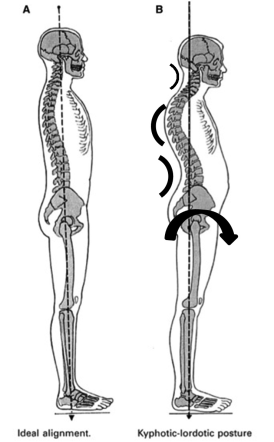
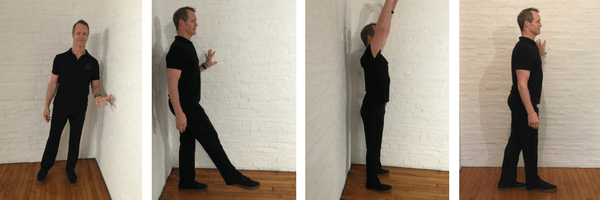
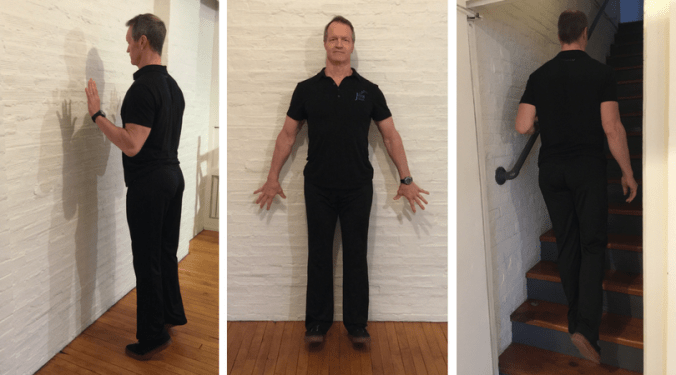
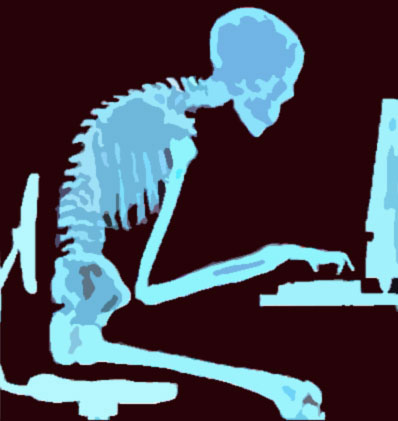 Poor posture can lead to numerous problems as we get older. Muscles that are in shortened positions for long periods of time become tight, which will prevent our joints from being able to return to their ideal stretched position. In example, when in a forward rounded position, the muscles in the front of our bodies become tight and make it difficult to stand up with a neutral spine.