In Search of… Perfection?

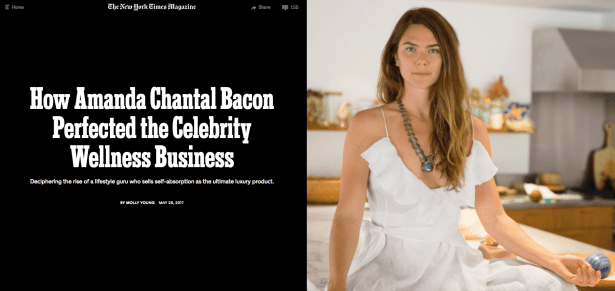
I recently read two things that prompted this post. The first was a New York Times article about Chantal Bacon, a “lifestyle guru” who produces and sells some very expensive, supposed wellness enhancing, products. The second thing I read was the book, The Subtle Art of Not Giving a F*ck: A Counterintuitive Approach to Living a Good Life by Mark Manson.

Wellness guru

So, what is it that drives us to spend outrageous amounts of money on products that promise to make us…what? Become one of the beautiful people? What are we really seeking? The problem, according to Manson, is that we set our reference points at unrealistic levels. Then, we constantly compare ourselves to those levels and end up unhappy about our looks, our bodies, our lives.

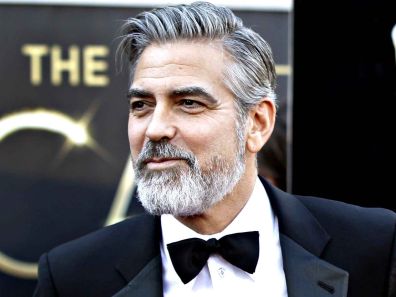
graybeardI’m slowly but surely losing my hair. I have a few more wrinkles every year. I have a few more aches and pains as time passes. I’m not thrilled by any of these changes. I could obsess about them. I could take every product known to counteract them, but I know I will never be as good looking or even have the hair of George Clooney. Well, George Clooney should not be who I benchmark myself against, and yet, the media and businesses trying to sell us products hold those unrealistic icons up to us and try to convince us that this is perfection and we should be trying to achieve this too.

The real take away note for us is that perfection is unattainable and the more we measure ourselves against perfection, the more unhappy we will be with where we are. Don’t let others tell you what or who you should be. There’s a saying, “Don’t let perfection get in the way of good.” Our search should be for a better us. Celebrate the successes and enjoy the journey of improvement. Learn, love, live life and be happy.


Older Americans Month?

I was just tracking down some information for a later article when I happened on to this. May is Older Americans Month (OAM), and, as I start to consider myself “older”, I had to find out what this is all about. It seems that the Administration for Community Living (ACL) has been leading the charge in celebrating OAM. ACL also created the theme for 2017. The theme is “Age Out Loud”, sort of a “Loud and Proud” for the aging adult. Frankly the theme could easily have been “Age Out Loud and Proud” because the point is to give the aging population the recognition that they (well… we) deserve.   Logos2

The older adult population continues to grow and with that, their desire to stay healthy, fit, active, and, as OAM states, “live their lives with boldness, confidence, and passion while serving as an inspiration to people of all ages.” In other words, to continue to kick butt and take names. I’m certainly all for that.

They have some fun ideas for things that you can do in your own community to celebrate Aging Out Loud and have links to some great resources from other organizations for the aging adult. See resources.

Age Out Loud is also meant to keep older adults engaged in the issues going on around us. Getting out and being heard on issues from city planning to healthcare. No retreating from the world here. Always active, always moving forward. #AgeOutLoud

Summer is Coming. What’s Your Workout Plan?

About this time of year, I start hearing people talking about how they’re going to stop going to the gym because they will be active outdoors all summer. I get it, active inside or active outside, it doesn’t really matter, does it? Well, I have to tell you. It’s not the same.

gardener

First, let me say that exercising or being active outside can have some significant emotional/psychological benefits. Even five minutes of “green exercise” can enhance your mood and feeling of well-being. So, yea for being outside! There are, however, a few cautionary notes to dropping out of your regular full body workout program.

Whether we are gardening or playing tennis, activities are never symmetrical. We always favor one arm or leg. Raking, digging, planting are one side dominant. We even get up or down on the ground favoring one leg. Tennis is essentially a one-armed sport. In golf, you always swing to one side. These asymmetries can create strength and flexibility imbalances that may cause injuries in time. kayak

Another issue is that these activities rarely take us through the full ranges of motion that we would (or should) be getting with our  gym workout. Full movement at the knees, hips, shoulders, elbows, etc. doesn’t come without planning for it. Walking, running, hiking, canoeing, kayaking, and biking do not promote joint mobility (or certainly not full-body joint mobility).

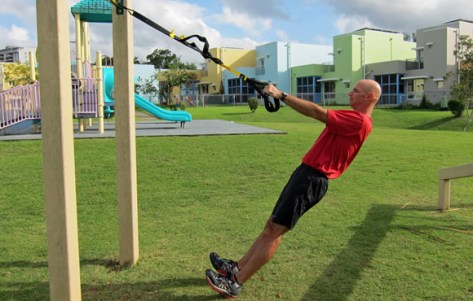
trx chest press

TRX (suspension device) for outdoor workouts

There are some solutions that are pretty simple. One option is to just keep doing your regular gym workout. If you don’t seem to have time and want to spend more time outside you can modify your workout to be shorter and/or go to the gym less frequently. In example, you could cut back to a 30 minute, twice a week. Another answer is to do your full body workout outdoors. There are a number of ways to make that happen. You can do bodyweight workouts, use a suspension device such as the TRX, or you could use elastic tubing that is very portable and very effective.

What you can’t do is go from a structured, full body workout program to summer “activities” and expect to maintain the benefits. You’ll come back in the fall having to start up at a much reduced level to reflect what you have lost. So, plan ahead and decide how you can continue your strength and mobility training throughout the summer.


What Do My Lipid Numbers Mean?

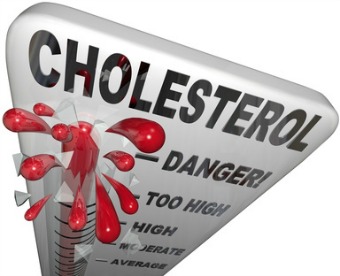
I just had my blood lipid panel taken. The results made me want to share some thoughts on this assessment. Let’s start with what cholesterol is and why we should care. According to the Mayo Clinic, “Cholesterol is a waxy substance that’s found in the fats (lipids) in your blood. While your body needs cholesterol to continue building healthy cells, having high cholesterol can increase your risk of heart disease.” The standard guideline when having a lipid panel done, is to have your total cholesterol reading as less than 200 mg.dL, but, total cholesterol is just an overall quick look. So, if your’s is over 200, don’t panic yet. It’s more accurate to look at the three other major components of your lipid panel. These are LDL (low density lipoproteins), HDL (high density lipoproteins), and triglycerides. You can think of LDL as the “bad cholesterol”, leaving garbage (plaque) to build up in your arteries. HDL is the “good cholesterol”, cleaning up the mess left by LDL. Finally, there’s triglycerides, which is not cholesterol, but fat in the blood and another potentially “bad” component. High triglyceride levels are also associated with increased risk of heart disease.

high_cholesterol_warning_sign

Back to my test. My total cholesterol is 226 mg/dL, 26 points higher than you would typically like to see. However, let’s look at the component breakdown. My LDL is 110 mg/dL with a desired standard of less than 150 mg/dL. Great… I’m under. HDL should be above 40 mg/dL and mine falls in at… drum roll….. 105 mg/dL. (above 60 is actually considered an anti-risk factor). Top that off with my triglycerides coming in at 53 mg/dL with a desired standard of less than 150 mg/dL and you can see that my high total cholesterol becomes less important.

So, if your numbers are not what they should be, what non-medication steps can you take to improve them?

  1. Exercise.
  2. Get to a healthy body weight.
  3. Quit smoking.
  4. Avoid eating trans fats. (Check you food labels)
  5. Eat food that are high in Omega 3. (i.e. fish, olive oil, and nuts)
  6. Eat foods that are high in fiber. (i.e. whole grains, beans, fruits and veggies)
  7. Limit your added sugar intake.
  8. Drink alcohol in moderation.

While these are great steps to take for many health benefits, there are times when medication is necessary to manage your cholesterol and triglyceride levels. Make sure you discuss your options with your doctor.


Squat Until You Die!

You’ve probably heard from the hardcore exercisers that squatting is one of those basic exercises that everyone should be doing. At the same time, I often hear some in the medical field say, “Oh no. You should avoid squatting. It’s too dangerous.” Let me cut to the chase and say… yes, everyone should be squatting and should continue to squat until you are too weak to get out of bed (which won’t happen until later in life because, well… you’re squatting).

Deep-Squat

I know, that does sound like an outrageous statement, but I believe the controversy lies in the misunderstanding of what a squat really is. Squatting is dropping your center of gravity by flexing (bending) your hips, knees, and ankles and usually involves the hip moving backward and the torso tipping forward (although to what degree depends on the squat variation and differences in body structure). It is something we every day. If you get up and down from a chair (or toilet) you’re squatting.

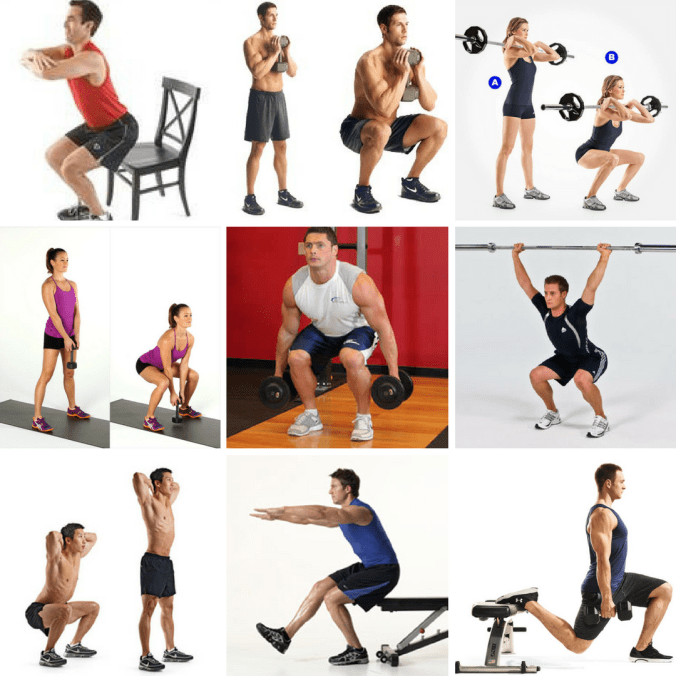
squat variations

Some squat variations (L-R, T-B): Chair Squat, Goblet Squat, Front Squat, Sumo Squat, Dumbbell Squat, Overhead Squat, Prisoner Squat, One-Legged Bench Squat, Bulgarian Split Squat.

There are many varieties of squats, and while not every variation works for every body, there is at least one that will work for you. You can also make modifications to make squats more accessible to you. Adjusting the weight, from partial body weight (such as assisted body weight squats, i.e. holding on to something.) to adding weight with dumbbells, barbells, etc. is one modification. Adjusting the range of motion is another (start with small, top end range of motion and go deeper as you get stronger).

So, the notion that someone shouldn’t squat because of age, or arthritis, or low bone mineral density, or whatever… is not taking into consideration that we need to be able to do this movement and there are endless ways to begin.

Let me know if you have any questions and, if not, squat away, my friend.

Will Working Out Fix My Back? (Shoulder? Hip?) 

I know a lot of personal trainers that will claim that they can fix your problem(s). Can they? Well, it depends on the personal trainer, your individual issue(s), and what is meant by “fixing” it.

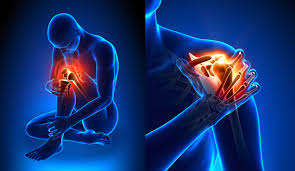
pain

Let me start this discussion with a confession. Most people wouldn’t know this, but, I’m in physical pain, every day, and have been for years. It’s not overwhelming, but it is annoying. I have spinal stenosis that creates a radiating nerve pain down my right leg. I have a torn meniscus in my left knee. I have arthritis in both of my thumbs which make gripping things painful. I had a complete shoulder replacement about five years ago (Although, this is no longer a source of pain. My shoulder feels great these days.). And then there are the day to day aches and pains that we all deal with as we get older. Yet, in spite of all this, I teach group fitness, lift weights, and do pretty much anything I want. My, “issues” do not limit my activity. This is because I work out regularly and consistently challenge myself. Am I “fixed”? No, but I am soooo much better than I would be if I wasn’t working out.

That’s my story, but could it fix other issues? Well, it’s not going to get rid of arthritis (but, it can increase your ability to do what you want and it can diminish the sense of pain.) It’s not going to reattach torn ligaments (but, it can strengthen the muscles surrounding the area and may allow you to continue activity without surgery [always check with your doctor]). That said, if you are having back pain because of weak core muscles and poor posture, yes, the right workout with a qualified personal trainer can correct this condition. If you are having pain that is determined to stem from improper gait or movement patterns, yes, these can be corrected and alleviate the pain.

So, yes, working out can “fix” some problems and can make the best of others. The key is to check with your doctor and with his/her approval, find the right personal trainer to work with and you can be on the road to a better quality of life.

The Final Straw

Many people go through life without feeling the need to exercise or watch what they eat. Weight gain, decreased strength, endurance, and/or flexibility, the onset of disease, these are all situations that happen gradually, many times without the individual’s notice. That is, until something happens that changes their perspective.

This final straw or moment of crisis, shifts an individual’s thinking from, “I’m fine the way I am.” to “I need to do something to change this.” If and when you have this moment, you should write it down in detail. What was going on? What did you hear and see? How did you feel? These are emotional moments and questions that require emotional answers. It is emotions, after all, that drives us. By documenting this, you will help to strengthen your resolve in changing and you will have something to turn to when your motivation wavers.

final-straw

The following are a few of the actual moments that brought clients to me for my help.

“At my last checkup, my doctor told me that I was pre-diabetic and that if I didn’t change how I was living my life, I would need to go on insulin.”

“I fell down outside my barn and I couldn’t get off the ground. It took me three hours to eventually get to something that I could use to help me pull myself up.”

“I saw a picture of myself and I couldn’t believe it was me. How could I have gained so much weight?”

“I just found out that my daughter is pregnant and I want to be around to be part of my grandchild’s life.”

To change our lives takes a change in our mindset, a shift in our priorities. When that final straw moment happens, you need to own it. You can change, and, while not knowing how to can be a problem, it’s no excuse. Find help and always keep in mind why changing is important to you and your life.

Good luck, and let me know if I can be of help. Mark

What a Pain!

Pain is a funny thing. For personal trainers, we have been taught that when a client feels pain it is a red flag. Stop what you are doing and send the client to a doctor. But pain is not redflag1always that simple. First, everyone perceives it differently. I’ve had clients that, after a few reps of an exercise, said that it hurts. ? OK, do I stop and send them to a doctor? Well, I do stop. But then we talk about what they are really experiencing. Where does it hurt? In the joint? In the muscle? OK, it’s in the muscle. What does that feel like? Is it sharp or stabbing? Is it dull or achey? Is it tension and fatigue? You’d be surprised how many people are unused to feeling muscle fatigue and report that as pain. I’ve also had clients that would tell me that their backs hurt when they did abdominal crunches (back when I used to have them do crunches). We’d discuss what they were sensing and determine that they were feeling a stretch tension in their lower back. This was neither harmful nor uncommon as one of the limiting factors in how high someone could crunch was the flexibility of the low back.

My point here is not to support the common declarations of “No pain, no gain.” or “Pain is weakness leaving the body.” Rather, I bring this up to make you aware that there are many sensations when you are working out that are often lumped into the pain category and to take a moment and analyze what you are really feeling.

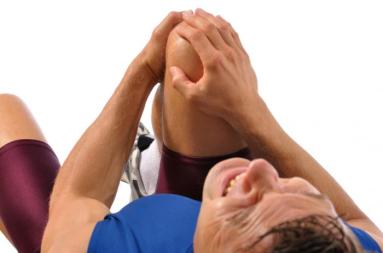
“Pain”, like Baskin-Robbins ice cream, comes in many flavors and depending on the flavor and where it is located, can help you understand its severity. First, let me say that joint pain is always more concerning than a muscular pain. With muscles, you can feel a burning fatigue, stretch tension, acheyness, soreness, cramping, etc. All of which are really more discomfort and, while not pleasant, they are not that concerning. A tearing feeling or pop, on the other hand, you had better pay attention to (stop what you’re doing and see your doctor). Joint pain should rarely be ignored. If ysevere-knee-painou have diagnosed arthritis or are just stiff and achey, maybe you can keep on keeping on. However, if you feel a sharp, stabbing sensation, a radiating pain, or even a strong ache in a joint, it is cause to stop what you are doing and seek medical attention. Joint issues can be very serious and should be addressed before returning to activity.

Backtracking a little, if there is any chronic pain that you are experiencing, no matter what flavor,  you should see your doctor. It’s always better to know what you’re dealing with. The diagnosis will let you make an informed decision as to what you can safely do or not do.

So, while some discomfort is expected in a fitness program, being able to discern between what might be considered normal and what is potentially a real injury, is important in keeping your body healthy. Listen to your body and get to know your flavors.


What’s Really Affordable Care

As I write this, the Affordable Care Act (aka ACA or Obamacare) is being dismantled for who knows what as a replacement. Although I personally think that the ACA was a great, first attempt at finding something better than a health care system that was already too expensive for most Americans, it does have it’s issues. aca-logoBut, you can never know all of the problems until something is actually put in place. In my humble opinion, we should now be focusing on correcting the things that don’t work with the ACA. That said, what I really wanted to talk about was the most affordable care… preventative care.

According to the CDC, 75% of health care costs are on people with chronic conditions. These chronic conditions include heart disease, stroke, cancer, diabetes, arthritis, obesity, and respiratory diseases. Furthermore, the CDC estimates that eliminating these 3 risk factors – poor diet, inactivity, and smoking – would prevent:

  • 80% of heart disease and stroke
  • 80% of type 2 diabetes
  • 40% of cancer.

cover-chronic-care_281731694While I know that the majority of smokers know that smoking is hazardous to their health, I believe that benefits of exercise and eating healthfully are too often thought of as just a way to look better. Many people don’t understand the magnitude of health benefits that also come with them. Managing your diet and physical activity really is a health intervention. See Exercise is Medicine!

Going forward, whatever health care system is developed or put in place, it must promote preventative care or we as a nation will never manage health care costs. Of course, you don’t have to wait for that to happen. Take charge of your heath today.

Without concerted strategic intervention, chronic diseases and their risk factors can be expected to cause more harm—and be more costly to society. We cannot effectively address escalating health care costs without addressing the problem of chronic diseases.” – CDC, The Power of Prevention

EIM Canada_clr


The Problem With New Year Resolutions

The new year is coming up and with that come the new year resolutions that rarely get accomplished. We’ve had enough new years come and go and most of us have experienced that feeling of the unachieved promise we made for the new year. Why do you think resolutions are so hard to keep? I have a few thoughts about it that I’m going to share with you.
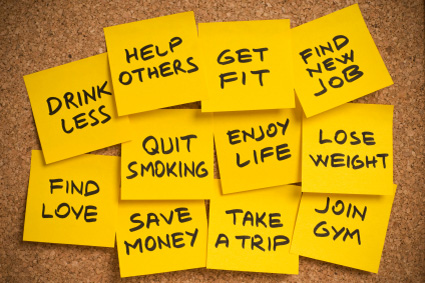
newyearresolutionResolutions rarely come with a plan. They are typically announced (even to ourselves) as a platitude. “This year I will… lose 40lbs, start my own business, quit smoking, spend more quality time with my family, etc.” These are well intentioned statements that, when not accompanied by a detailed plan, can put huge pressure on an individual. They are also highly unlikely to be achieved which leaves us feeling like losers.

Resolutions should also, like any goal, be set using SMART guidelines. SMART stands for Specific, Measurable, Attainable, Realistic, and Time Bound.

Specific is the details of the goal. If your goal is to lose weight, how much and how are you going to accomplish that. I will lose 40lbs by creating an exercise routine that consists of 30min of cardio and 30min of weight lifting three times per week. I will also track my calories using myfitnesspal app and stay within my allotted calorie range.

Measurable, is that specific goal measureable? Well, the more specific it is, the easier it is to measure. Did you workout or not? Did you track your calories or not? Having said that, it may be a better choice to not be black and white about it. Give yourself a percentage ranking for the tasks. I worked out twice this week instead of three. So, I scored 66%. Now, what can you do to get yourself to 100%?

Attainable is a reality check. Is this something you can actually achieve? We can achieve most things, but if I were to say that I wanted to play pro basketball (at age 59), it is highly unlikely that I can make that happen.

Realistic, Well, this has always bugged me a little. It’s really the same idea as Attainable. Is this goal realistic? Honestly, having been born and raised in Maine, I prefer to go with the Maine version. Mainers would pronounce smart “smat” (dropping the r sound) which works just as well as a goal setting guideline.

Time bound is simply putting a deadline on reaching your goals. Without a deadline, it becomes easy to put things off. As the  Parkinson’s law states, “work expands so as to fill the time available for its completion”. The longer you give it, the longer it takes and with no deadline, it will unlikely get done at all.

Our resolutions should also come with a strong and detailed Why. Why is attaining this goal so important to you. Why is this goal important to you? Losing weight is not about looking better or being healthier. It might be about feeling more self confidence when you feel you look better or it may be about being healthier so that you will live long enough to see your grandchildren grow up. Write dow the real, deeper reason why your goal is important.

To top off our chances of success, we should have someone that we are accountable to. Maybe you ask a friend or family member to help keep you on task. Check in as often as you need, but set a regular schedule. Every day at 8pm, or every Monday at 7am. You could even set a time that you check in with yourself. The key is to set a time to objectively evaluate how you are doing.

So, if you want to win at the resolution game, be SMART, know your why, and be accountable for your meeting your steps toward your goal.