Ditching Your Frenemies

Anyone that is trying to change their lives for the better, whether changing their career or trying to get healthier, will probably have experienced the “frenemy”. According to the Urban Dictionary, a frenemy is The type of “friend” whose words or actions bring you down. (whether you realize it as intentional or not.” Maybe it takes the form of putting down your choice, “Why would you try that? That’s out of your reach.” Or, maybe they simply try to get you to not follow through with it. “Oh, you can have another piece of pie… what’s it going to hurt?”

frenemies2

So, the question is… are they really your friend? If they are, why would they make reaching your goal more difficult?

Obviously, there are those people that just play at being your friend and really don’t have your best intentions at heart. They may keep you around to make themselves feel superior (think DUFF: Designated Ugly Fat Friend). They could also be using you to get something that they need or want. These are the people that you should have ditched long ago, but may have hoped, in spite of things that they may say to you, that they really do like you (and you don’t have many friends).

Then there are those individuals that really do like you, want to be your friend, and yet still sabotage your efforts to change. They may even be completely unaware they are doing it.  This may be that they feel badly that you are finding the motivation to better yourself and they aren’t. To feel better about their lack of initiative, they try to keep you with them. “Stay and have another drink with me.” “Don’t make me eat by myself.” “Come see a movie with me instead of going off to the gym.”

There’s only one real way to deal with frenemies. Sit them down and have a conversation about the choices that you are trying to make and why it’s so important to you. Ask them to support you in this and respect the decisions that you make. (i.e. When you say that you are going to work out, they should cheer you on, not try to have you skip it.) If they change and start supporting you, great! They are being a friend. If they continue their belittling behavior or are still trying to undermine your efforts, ditch them! Change is difficult enough and life is too short without continuing to keep company with people that don’t want the best for you.


Challenge Yourself!

There all kinds of “Challenges” running about on the internet. They are set periods of time in which you do or don’t do something throughout that time. Challenges can be great ways to jumpstart a program. Most people can do something difficult to attain a particular goal. However, before you jump on the bandwagon, there are a few considerations that you should take into account.challenge

  • Don’t just do a challenge because it’s out there. I saw a “30 minute plank challenge” on Facebook that was ridiculous. First, there’s no point to doing a plank for 30 minutes and second, couldn’t you choose a challenge that is more meaningful and more likely to help you reach your goals?
    • Choose a challenge that sets up behavioral change beyond the timeframe. Say you want to eat better, maybe the challenge is to eat no processed foods. For a short time this might be a good one and, beyond the end of it, you’ll be in better control and better aware of eating at least less of those food items.
    • Choose to prepare for something. Maybe you want to train for a certain event such as a race or a hike or an obstacle course. Couch to 5K is an example of that.
  • You can create your own challenge. Don’t get hung up on looking for a set program to do. Just create your own.
  • Do it with a friend. Doing things that are challenging are typically more successful if you have the support of, and share the experience with, a friend.
  • Choose a timeframe that is realistic. If the chosen timeframe is too short, it is either unrealistic to reach your goal or it’s not much of a challenge. Many programs run 6, 8, 12 weeks (don’t ask me why, but I don’t see many 10 wk programs). These lengths give enough time to accomplish something meaningful.
  • Review your success once the challenge is done. After you complete your challenge, you should take a good look at what you’ve accomplished and appreciate the effort that you put into it. Maybe it wasn’t perfect. That’s okay. It’s not all or nothing. Look at it in percentages. In example, if you meant to eat breakfast every day and you only did it half of the time, that’s still 50% more than you were doing before. Or, you were training for a running event and you only could get in 3 of the 4 miles per day that you set out to do. That’s still 75% of your goal. In both examples, good for you!

Challenges, something done or not done for a set period of time, may be a way to change your behaviors or accomplish something on your bucket list. Think about what change would be meaningful to you and set up a challenge to get yourself started.

Good luck, and please let me know if you could use some help with this.

Success is Not Linear!

Every advertisement or “guru” (both of which are trying to sell you something) will claim that if you just use this product or try this method, you’ll gain wealth, lose fat, get healthy, be popular, yada, yada, yada… If this, then that! Simple. Well, not so fast. Nothing is that simple. There are always stumbling blocks (funny that nobody wants to talk about that). There are always things that you either didn’t plan for, or couldn’t plan for. These things will set you back. You will lose ground and guess what… it’s okay.

nonlinear success1

Your success will not be a linear progression. The key to success is to stay the course. The path may lead up and down, but the path (your plan) will eventually get you to your goal.

Things that can help you make the path a little smoother include:

  1. Imagine the obstacles that could show up, or ones that have shown up in the past, and come up with a plan to pre-handle those obstacles.
  2. Don’t let the unexpected set you back more than it needs to. When something sets you back, it’s easy to let the emotional side get the better of you. This can often lead to a delay in getting back up and moving again. Whatever happened, the sooner you get back on your path, the sooner you reach your goal. Start back up, now!
  3. Embrace the journey, don’t stress out about the moment. Committing to the long haul gives you prospective and allows you to see that little fluctuations here and there are not that important in the scheme of things.

Untitled design (1)

Accepting that your progress will not be linear and that that is okay, will set you up for a a more positive attitude and with that, a better chance of succeeding.

Good luck with your journey!

PHIT Act Passes in House and Why You Should Care

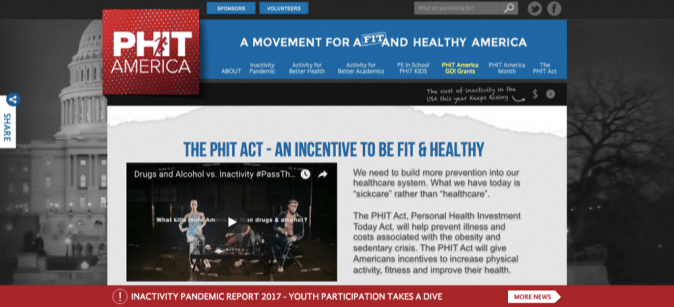
The PHIT Act ( Personal Health Investment Today) passed the House of Representatives vote on July 25, 2018. What this actually means is that people could pay for health club memberships, fitness programs, personal training, youth sports, etc. using their Health Savings Accounts (HSA) and/or their Flexible Savings Accounts (FSA) with no tax penalty. PHIT

This is one of those steps that we in the fitness industry have been working for and waiting for. This will help decrease one of the barriers to getting fit and healthy… the cost. Now, of course there are other barriers (perceived or actual), such as lack of time, access to quality information, and appropriate facilities, but this is a huge start.

The battle isn’t over either, though. The PHIT Act still needs to pass the Senate. Contact your Senators and let them know how important this is.

Find out more at PHIT America.

Don’t Break the Chain

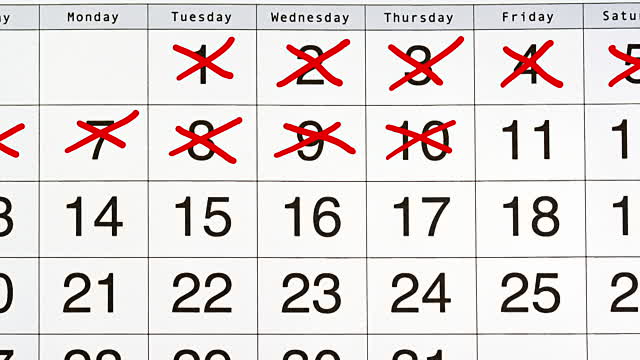
As the story goes, when a young comedian asked Jerry Seinfeld if he had any words of wisdom, Seinfeld said, “Don’t break the chain.” What he was talking about was that he set a goal for himself of writing X number of jokes every day and when he accomplished this, he would cross off that day on the calendar. This created his “chain” or consecutive days of achievement.

dont break the chain

The idea of this chain, or consistency tracking, is a way to motivate you into creating a habit that helps you work toward your goals. Currently, I’m using Duolingo to help me learn Japanese. The app sends me a reminder every day to not break the chain.

duolingoThere is a definite desire to build that consistency record. Whether you are marking the days that you work out or eat correctly or practice your instrument…. checking off those days feels good and does add motivation. And… the longer your chain or record goes, the more you try not to break it.


Now, probably, at some point, you will miss a day/break the chain, and you need to jump back on and start again from scratch (as far as the chain is concerned), but having worked at that consistency, we are already ahead of the game, both in what we have accomplished goal wise and in the building of a habit.

So, start now and again as often as you need to. Build that chain. Build those habits that will lead you to your goals.

Run a Simulation for Success

I’m currently reading Mind Hacking by Sir John Hargrave. In essence, the book is about how to change behaviors. One of the concepts that he discusses is the idea of running simulations of your future plans. Now, in the past, I’ve read research that’s shown that those who have a clear plan for the future have a better chance of attaining it than those who do not. Additionally, those that write those plans down have a better chance of attaining them than those that just keep them in their head. Now, Hargrave has cited research that shows that individuals that run simulations as to how they are going to achieve their goals, are the most successful.296D0E66-F203-4F6C-A115-4A84FF7EC0BDSo, what does it mean to run simulations? Imagine mapping out how you intend on reaching your goals from beginning to end. Now, you write out everything you can think of that could throw a monkey-wrench into your plan. A simulation is the addition of those stumbling blocks AND the solutions to deal with them and still keep you on course to attain your goals.

Start simulations with things that have happened in the past, so you know they could happen again in the future. Let’s say you plan out what days and times you are going to head to the gym to work out. Ask yourself what would happen if a deadline for a project is coming up and you’re going to have to stay late to work on it. This is going to knock out the evenings that you were planning to go to the gym. You have, however, thought this possibility through. You have a contingency plan. You get up an hour earlier in the morning and fit your workouts in before work. (as an example) The important idea is to not be reactionary. Don’t wait until something happens and then try to figure it out.

For maximum chances of success, have clear, specific goals in mind. Write them down. Write down how you intend on reaching them. Think of possible obstacles. Run simulations. Come up with contingencies and continue your progress in spite of those things that pop up to challenge you. You will even feel more confident in your ability to reach your goals.

Good luck!


“Savage Consistency!”

In describing how he helped one of his clients lose 8″ around his waist in a few short months, a personal trainer friend of mine, Chad Landers stated, “No crazy diets, no insane workouts. Just Savage Consistency with the basics.” I love the phrase that he used, “Savage Consistency” and needed to discuss that idea.

People often wonder why they aren’t seeing results from their fitness program. Well, of course, part of that might be that they aren’t controlling their diets. But the other part is often that they just aren’t working out consistently. Training once a week or every other week is not going to change your body or health status.

Untitled design (8)It’s like brushing your teeth. Just brushing occasionally is not going to keep them pearly white and cavity free. You have to make it part of your daily regimen. The same is true for working out or managing your diet. To see real results, you have to be consistent.


Here’s an important bit, though, it’s not an all or nothing thing. You don’t have to spend huge amounts of time at it. In my opinion, creating the habit is, initially, more important than how much you do during your workout. Show up. Do something. Show up again. Do a little more. Show up again…etc. Create the habit of doing, at whatever level, and you can build the time and intensity as you go.

Start your program with commitment to “Savage Consistency”. Commit to getting some kind of workout in (this may be 3 or more times per week) and some form of nutrition change in every day. Embrace the notion that something done with consistency is going to be better than having that “perfect” workout or diet day, once every blue moon.

P.S. Now, of course, something is better than nothing. So, if occasionally doing something is truly all you can manage, go with it. You just won’t see the results you could if you were more consistent.

What If Your Doctor is Wrong?

There are great doctors and there are awful doctors. There are doctors in-between. Just like any other profession. Of course, there are doctors that are great in some areas and lousy in other areas. The problem is knowing which your doctor is.

Just the other day, a client in her mid-sixties came to me after injuring her wrist. She said that when she went to her doctor, the doctor told her to stop lifting weights, which, for her wrist at the time, would not have been unreasonable. However, the doctor then followed up with, “Why would a woman your age want to lift weights anyway?” I was taken back that this opinion still exists in the medical community. My client said that she wasn’t going to be swayed by her doctor and that she knows the importance of strength training as we get older. (Phew!)

scrubs

A scene from “Scrubs”

Now, even the best doctors can’t stay current on all areas of human health. As a fitness professional, I know that there is new research every day and that it takes work on my part to stay up with the most current information. Because there can be new studies that could potentially disprove what I “know”, I understand that I can be proven wrong and am happy to change my position if enough evidence supports it. Good doctors will do the same.

So, my suggestion to you when you believe your doctor is mistaken, is to find the research to back up what you believe is correct. Present that information to your doctor ask to discuss it with him or her. If they are not willing to discuss it, maybe you should look for a doctor who will. There is a caveat to this though, don’t just take what you find on Facebook or what Dr. Oz says to be as good as scientifically supported information. Use credible sources. Here’s a pretty good list of sources for accurate health and medical information. RefSeek’s guide to the 25 best online resources for medical reference Remember, doctors are not infallible. Don’t fear questioning them. Be your own advocate.

*By the way, here’s some research on strength training as we get older: “Current research has demonstrated that strength-training exercises have the ability to combat weakness and frailty and their debilitating consequences. Done regularly (e.g., 2 to 3 days per week), these exercises build muscle strength and muscle mass and preserve bone density, independence, and vitality with age. In addition, strength training also has the ability to reduce the risk of osteoporosis and the signs and symptoms of numerous chronic diseases such as heart disease, arthritis, and type 2 diabetes, while also improving sleep and reducing depression. – The benefits of strength training for older adults.  Am J Prev Med. 2003 Oct;25 (3 Suppl 2):141-9. Seguin R1, Nelson ME.


Let That Be a Lesson to You!

Does trying new things scare you? Did you ever think to yourself, “I’m too old to start this.” or, “I’ll make a fool out of myself”? You’re not alone. Everyone (well, most everyone) has things that make them feel that way. This is unfortunate for a couple of reasons.

men's Fitness after 50

My next venture, Men’s Fitness After 50 podcast

First, we miss out on a lot of things that could enrich our lives. This could be starting an exercise program, taking dance lessons, cooking lessons, learning a language, or starting a business.

Second, those things that challenge us, the very things that we’re afraid of feeling stupid doing, are among the best things we can do to keep our brains functioning at their best. The cognitive work required to learn new skills is one of the 5 pillars of brain fitness (exercise, nutrition, stress reduction, socialization, and… cognitive challenge).

Personally, I’ll jump into many things without worrying about how I look, however, when it comes to my profession, my reputation, I honestly get a little apprehensive (scared.. ok, I said it.). In example, I’ve wanted to try podcasting for the better part of a year and have been to afraid that I would make a fool of myself. Well, we all need to get over it and just do it (not to get too Nike on you). The benefits for us, better health, greater skills, better quality of life,  far outweigh the perceived risks.

So, whatever you have wanted to do and have just been afraid to start… jump in, the water is fine. (oh… and I’ll start podcasting on Monday). Let me know what you’d like to try , but are afraid to, in the comments.

Want Results? Get Off Your Big Fat But!

No, no misspelling here. I’m not talking about your backside. I’m talking about the excuses we find to not do what we know we should be doing in order to improve our health and fitness. “I know I should _______, BUT…”

If you want something to change, you need to be willing to do something different (and that usually means something more difficult). For changes in our health and fitness levels, you need to make sure your diet is where it’s supposed to be, you’re getting in the right kind of workouts with the appropriate frequency, keeping your stress levels down, and getting enough sleep.

Excuses

Excuses outweighing your results?

When you’re not getting the results you want, you need to look at these areas and ask yourself which of those items aren’t happening and what it is that’s getting in your way. As you identify the area of difficulty, listen to yourself. “I know I shouldn’t be eating the doughnuts that work supplies, but it’s all they have there.” “I have every intention of getting to the gym, but something always comes up at work.” Those buts are your excuses, your scapegoats, and you have to recognize that fact. That’s not to say they aren’t a problem, only that knowing that they are a problem means you need to come up with a different solution as to how to work around them. You need to pre-plan for those occasions when your normal schedule is thrown off.

In example, normally your diet is good. You eat what, when, and where you’re supposed to. But, when your friends come to visit for a long weekend, you end up overindulging the whole time and feeling guilty. So, imagine they just called. You know how this weekend usually goes. Ask yourself what you could do differently that would make your weekend diet better. Could you have more fresh fruits and vegetables on hand? If you usually drink alcoholic beverages, could you alternate between those drinks and a glass of water?

The key to getting the results you want, reaching your goals, is getting rid of the big fat BUT that has been allowing you to think you had an excuse. Well, it isn’t an excuse. A but simply means you need to come up with a new way to handle those things that have been getting in your way. If it means enough to you, you can find a solution.

Please let me know if you need any help losing your big but.