Older Americans Month?

I was just tracking down some information for a later article when I happened on to this. May is Older Americans Month (OAM), and, as I start to consider myself “older”, I had to find out what this is all about. It seems that the Administration for Community Living (ACL) has been leading the charge in celebrating OAM. ACL also created the theme for 2017. The theme is “Age Out Loud”, sort of a “Loud and Proud” for the aging adult. Frankly the theme could easily have been “Age Out Loud and Proud” because the point is to give the aging population the recognition that they (well… we) deserve.   Logos2

The older adult population continues to grow and with that, their desire to stay healthy, fit, active, and, as OAM states, “live their lives with boldness, confidence, and passion while serving as an inspiration to people of all ages.” In other words, to continue to kick butt and take names. I’m certainly all for that.

They have some fun ideas for things that you can do in your own community to celebrate Aging Out Loud and have links to some great resources from other organizations for the aging adult. See resources.

Age Out Loud is also meant to keep older adults engaged in the issues going on around us. Getting out and being heard on issues from city planning to healthcare. No retreating from the world here. Always active, always moving forward. #AgeOutLoud

Squat Until You Die!

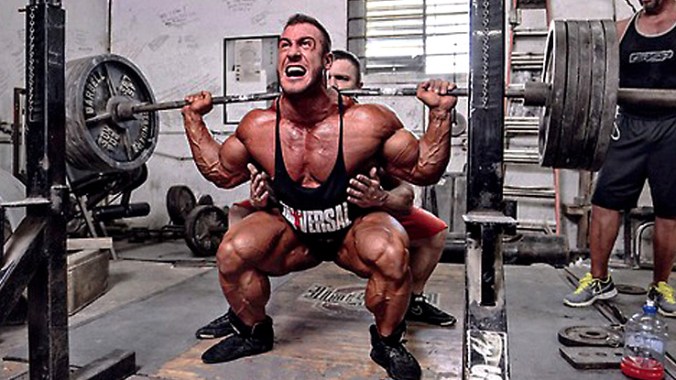
You’ve probably heard from the hardcore exercisers that squatting is one of those basic exercises that everyone should be doing. At the same time, I often hear some in the medical field say, “Oh no. You should avoid squatting. It’s too dangerous.” Let me cut to the chase and say… yes, everyone should be squatting and should continue to squat until you are too weak to get out of bed (which won’t happen until later in life because, well… you’re squatting).

Deep-Squat

I know, that does sound like an outrageous statement, but I believe the controversy lies in the misunderstanding of what a squat really is. Squatting is dropping your center of gravity by flexing (bending) your hips, knees, and ankles and usually involves the hip moving backward and the torso tipping forward (although to what degree depends on the squat variation and differences in body structure). It is something we every day. If you get up and down from a chair (or toilet) you’re squatting.

squat variations

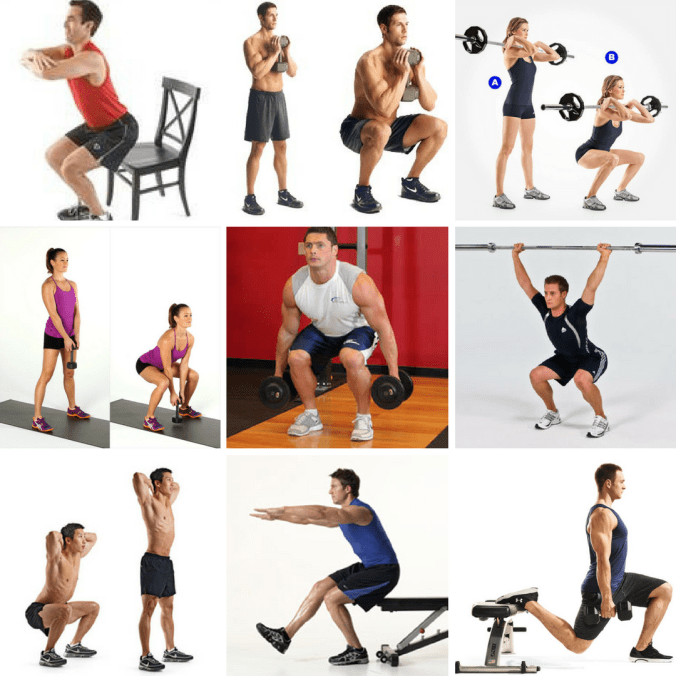
Some squat variations (L-R, T-B): Chair Squat, Goblet Squat, Front Squat, Sumo Squat, Dumbbell Squat, Overhead Squat, Prisoner Squat, One-Legged Bench Squat, Bulgarian Split Squat.

There are many varieties of squats, and while not every variation works for every body, there is at least one that will work for you. You can also make modifications to make squats more accessible to you. Adjusting the weight, from partial body weight (such as assisted body weight squats, i.e. holding on to something.) to adding weight with dumbbells, barbells, etc. is one modification. Adjusting the range of motion is another (start with small, top end range of motion and go deeper as you get stronger).

So, the notion that someone shouldn’t squat because of age, or arthritis, or low bone mineral density, or whatever… is not taking into consideration that we need to be able to do this movement and there are endless ways to begin.

Let me know if you have any questions and, if not, squat away, my friend.

What’s More Important as We Get Older, Cardio or Resistance Training?

A brief history… until “aerobics” broke onto the scene with Kenneth Cooper’s books, Aerobics (1968) and The Aerobics Way (1978), fitness was dominated by resistance training. cooper-aerobicsCooper’s books changed the face of exercise by supplying research showing the health benefits of cardiovascular training. When I was in college in the late 70s, my exercise science professors actually asked me to teach the weight training portion of their courses because none of them had any experience with anything other than aerobics (now commonly termed as cardio).lalanne

As a result of that paradigm shift, most health related research only looked at the benefits of cardio. Since that’s where the research was, cardio was the mode of exercise that was most recommended for health. Thankfully, resistance training has received more attention by researchers in the past couple of decades.

For the sake of this article, I’ll stick to an older definition of cardiovascular exercise as rhythmic, continuous, and maintaining a heart rate of 50-85% of your heart rate reserve (max heart rate – resting heart rate). Some typical cardio activities include walking, running, cycling, swimming, dancing, cross-country skiing, etc. Let’s define resistance training as loading movements with a force with the intent of increasing muscular strength or endurance. This can be with body weight, tubing, machines, free weights, etc. Please note that these definitions are simplistic for the sake of discussion. The truth is that there are many hybrid forms of exercise as well.

There are significant benefits from both of these exercise modalities. Both, in varying degrees, can decrease the risk of cardiovascular disease, improve lung function, increase insulin sensitivity, improve circulation, relieve stress, improve memory and cognitive function, help control weight, and many other positive health changes. So, which do we choose?

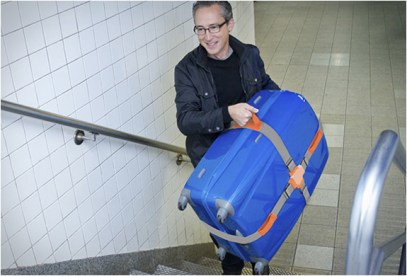
If we are talking about maximum benefits as we age, the best answer is to do some of both. That said, I’m going to say that IF I had to choose one, I would choose resistance training because, if done correctly, it can provide a greater ability to do daily activities. That, to me, speaks to keeping independence and quality of life. quirky_lift_4These activities, squatting down, lifting, carrying, pulling, and pushing, all benefit more from resistance training than traditional cardio training. Resistance training is also better at building/maintaining lean body mass, increasing fat loss, and improving bone mineral density.

Now many people hesitate at the idea of starting a resistance training program. They think that they are too old to be throwing huge weights on their back to squat or on the bench press. I’ve even heard doctors say that their patients shouldn’t squat. That’s a misperception of what resistance training really is. Getting up and down out of a chair (or off a toilet seat) is a squat. It’s a movement we need to be able to do and if getting out of your chair is difficult, that may be what you start with. Try getting out of your chair 6-10 times in a row. That’s resistance training and your body weight is the resistance. Doing repetitions of “chair squats” will strengthen your legs and hips and make getting out of the chair less of a challenge.

So, when you know you should be exercising and are finally ready to do something about it, don’t automatically think that cardio will do it for you. It is definitely good to do, but having the right resistance training program will give you faster and better results in how capable you are in doing your daily activities.


Will Working Out Fix My Back? (Shoulder? Hip?) 

I know a lot of personal trainers that will claim that they can fix your problem(s). Can they? Well, it depends on the personal trainer, your individual issue(s), and what is meant by “fixing” it.

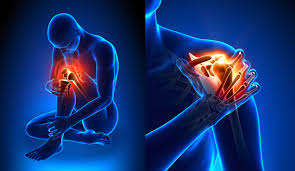
pain

Let me start this discussion with a confession. Most people wouldn’t know this, but, I’m in physical pain, every day, and have been for years. It’s not overwhelming, but it is annoying. I have spinal stenosis that creates a radiating nerve pain down my right leg. I have a torn meniscus in my left knee. I have arthritis in both of my thumbs which make gripping things painful. I had a complete shoulder replacement about five years ago (Although, this is no longer a source of pain. My shoulder feels great these days.). And then there are the day to day aches and pains that we all deal with as we get older. Yet, in spite of all this, I teach group fitness, lift weights, and do pretty much anything I want. My, “issues” do not limit my activity. This is because I work out regularly and consistently challenge myself. Am I “fixed”? No, but I am soooo much better than I would be if I wasn’t working out.

That’s my story, but could it fix other issues? Well, it’s not going to get rid of arthritis (but, it can increase your ability to do what you want and it can diminish the sense of pain.) It’s not going to reattach torn ligaments (but, it can strengthen the muscles surrounding the area and may allow you to continue activity without surgery [always check with your doctor]). That said, if you are having back pain because of weak core muscles and poor posture, yes, the right workout with a qualified personal trainer can correct this condition. If you are having pain that is determined to stem from improper gait or movement patterns, yes, these can be corrected and alleviate the pain.

So, yes, working out can “fix” some problems and can make the best of others. The key is to check with your doctor and with his/her approval, find the right personal trainer to work with and you can be on the road to a better quality of life.

Do Our Dietary Needs Change As We Age?

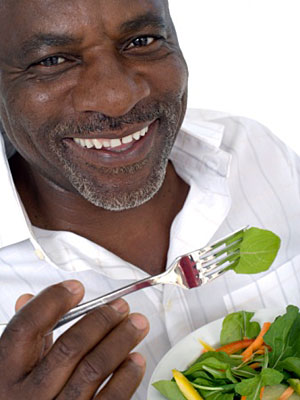
As I was getting ready to replenish my supply of a multi-vitamin/mineral supplement, Centrum Silver for Men caught my eye. This supplement (and the generic versions) are made for the specific needs for men over 50. Hmmn? Being 59, it made me wonder if my nutritional needs had actually changed because of my age. Do we, in fact, need different nutrients because we are older ? older-eating Here are some sources that I looked through for an answer.

According to Eatright.org (The Academy of Nutrition and Dietetics), older men need more calcium and vitamin D (no specific levels stated), as well as more dietary fiber (30g/day).

While the Oregon State University gives specific micronutrient recommendations for adults >50 years old, they don’t indicate any changes from the <50 population.

Finally, the Food and Nutrition Board of the Institute of Medicine, National Academies provides recommended age specific intakes for men and women Dietary Reference Intakes (DRIs): Estimated Average Requirements. Here the only change for men 50-70 is for an increase in Vitamin B6.

So, as for micronutrients go, we might need more calcium, fiber, and vitamins D and B6. Let’s back up a bit and look at the big picture. One of the main nutritional issues for aging adults is malnutrition because as we age we tend to eat less. This may be a result of being less physically active and therefore needing fewer calories or it may simply be a loss of appetite. As you might suspect, a decrease in calories also means a decrease in the nutrients that we take in. The concern is that our health can be compromised if the intake levels of certain nutrients gets too low.

Here are the questions, if we want to keep our micronutrient levels optimal, do we just eat more to get the nutrition we are lacking? or should we take a supplement? if so, does the supplement need to be age specific?

If we are eating less because we are less active, then the decrease in calories is appropriate and to add calories without adding activity would result in gaining fat weight. Of course, I’d like to say, “Get active!” as that would not only allow for a greater caloric intake but also a more functional, self-sufficient life. In lieu of taking in more calories, it seems quite reasonable to take a supplement (check with your doctor first). I take a multi-vitamin/mineral as a “catch-all”, to fill in the gaps just in case I’m not getting the recommended levels. As for the age-specific supplements, I think that if you weren’t eating at all, it might be important. But, as a supplement to your diet (you’re not starting from scratch, after all), I don’t think there’s any real need get that specific.

Back to the original question, do our dietary needs change as we get age? No… and yes. No, there isn’t any significant change in total amounts needed, but yes, as our dietary intake decreases the need to prevent deficiencies becomes greater.

“I Don’t Need Help. Why, Back in My Day…”

A man’s pride can be his downfall, and he needs to learn when to turn to others for support and guidance. – Bear Grylls

Older men are the worst (I know because I am one.) We’ve had at least half a lifetime’s worth of experience and we believe that means that we know stuff.

Well, we do know stuff, but often times not as much as we think we do. It turns out that sometimes what we think we know, we remember incorrectly. Other times what we believed was “The way” to do something has since been proven to be ineffective or even harmful. Have you ever found yourself saying, “Back in my day…”? I do fairly often, but it’s not to show expertise. I discovered early on that if I relied on what I learned when I was younger, I would have found myself left behind in the world. Now, when I use, “back in my day” it’s to illustrate how far off the mark we were.

casey_viator_nautilus_flexing-650x429

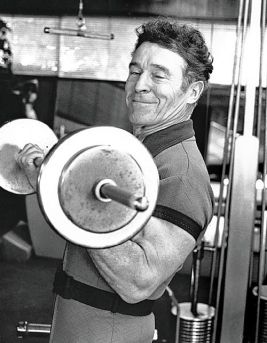
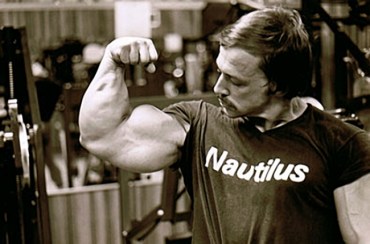
Old-time bodybuilding champion and Nautilus pitch man, Casey Viator

In example, “Back in my day, we used a Nautilus machine circuit as a major part of our strength workouts for college football.” True story. While it might have done a fine job at building muscle, we now know that machine-based strength training programs do not have the best carry over to sports performance.


What myths and fallacies are you hanging on to? Are you putting in a lot of time training your abs to lose the fat around your waist? (There is no spot reducing. Sorry.) Are you putting in lots of time on cardio to lose weight? (It’s not the most effective way to take off the fat.) Are you doing yoga and avoiding weight training so you will build longer, leaner muscles? (Muscles don’t build longer, and getting leaner results from the right caloric balance.)

There’s also the issue of what you were training for back then. The goals of the past may not be what you want from your training now. I used to train for strength and power. That was when I was playing football. Now, my goals are different and my training reflects that.

The point I’m trying to make is that “back in my day” information may be a day too late (or, more likely, years too late.).

fat-belt-3

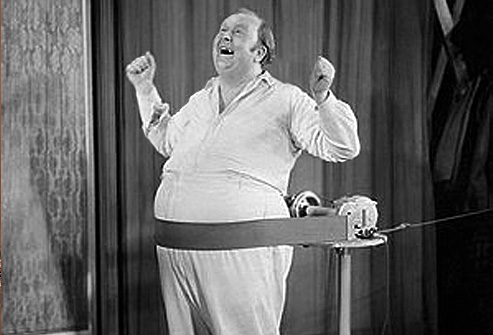
“I can feel it working!”

Don’t take the chance that what you “knew” back then, still holds true and don’t let your pride or ego keep you from asking for help. Find a certified, experienced personal trainer to help make sure your training program is one that is based on the most current scientific evidence and is specifically created to meet your individual needs.


The Final Straw

Many people go through life without feeling the need to exercise or watch what they eat. Weight gain, decreased strength, endurance, and/or flexibility, the onset of disease, these are all situations that happen gradually, many times without the individual’s notice. That is, until something happens that changes their perspective.

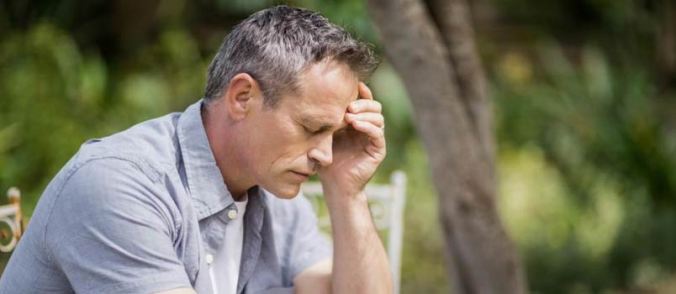
This final straw or moment of crisis, shifts an individual’s thinking from, “I’m fine the way I am.” to “I need to do something to change this.” If and when you have this moment, you should write it down in detail. What was going on? What did you hear and see? How did you feel? These are emotional moments and questions that require emotional answers. It is emotions, after all, that drives us. By documenting this, you will help to strengthen your resolve in changing and you will have something to turn to when your motivation wavers.

final-straw

The following are a few of the actual moments that brought clients to me for my help.

“At my last checkup, my doctor told me that I was pre-diabetic and that if I didn’t change how I was living my life, I would need to go on insulin.”

“I fell down outside my barn and I couldn’t get off the ground. It took me three hours to eventually get to something that I could use to help me pull myself up.”

“I saw a picture of myself and I couldn’t believe it was me. How could I have gained so much weight?”

“I just found out that my daughter is pregnant and I want to be around to be part of my grandchild’s life.”

To change our lives takes a change in our mindset, a shift in our priorities. When that final straw moment happens, you need to own it. You can change, and, while not knowing how to can be a problem, it’s no excuse. Find help and always keep in mind why changing is important to you and your life.

Good luck, and let me know if I can be of help. Mark

The Loss of Balance Fear Spiral

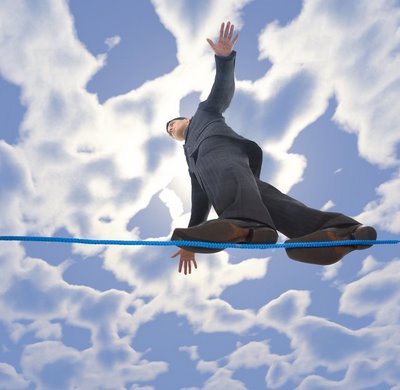
Balance, like most other aspects of fitness, falls under the “use it or lose it” category. As we age, we tend to be less active. With that decrease in activity comes sarcopenia, a wasting of muscle that causes a drop in resting metabolic rate, increased fat weight, loss of strength, and functional abilities. A drop in activity can also decrease flexibility and balance. We notice these things, of course. We can’t do the things that we used to be able to do. So, when it comes to balance, the “What if I fall?” question that we start to ask ourselves is followed by fear and anxiety.

tight-rope

That fear and anxiety causes us to start to hedge our bets when it comes to balance. If you try to stand on one leg, right now, I’ll bet that you fall inward, toward the midline. Having worked with many older adults, I’ve found that this is almost universal. Why is that, you might ask. I believe (yes, this is my humble opinion, although based on years of working with the issue) that the fear of falling has started making people play it safe. If I stand balanced on one leg and lose my balance, which direction would be safer to fall? If I fall outward, I might not be able to catch myself and I could get hurt. If I fall inward, I simply catch myself with my other foot and all is right with the world. So, rather than take the chance of falling outward, I begin to pull back on my balance, never quite getting on top of the leg. This guarantees that I fall inward.  The same is true in falling forward or backward. If I lose my balance and fall backward, I could really hurt myself. However, if I fall forward I’ll either be able to get a foot out in front or at least be able to break the fall with my hands. Hence, we start to lean forward… just in case.

What’s the harm in playing it safe? Well, as we start to hedge our bet, never really balancing on one leg or standing up straight as we walk, our strides become shorter as we fall inward. We’ve decreased the balance challenge, which decreases our actual ability to balance, which we start to feel, which makes us hedge our bet more and challenge our balance even less, and… the vicious cycle continues. Before you know it, your walk has turned into a sequence of short steps, falling forward and inward. You’re now doing the old person shuffle.

The good news is that you can both prevent the loss of balance and/or regain it once you’ve started to lose it. This, like other aspects of fitness, comes from regularly challenging it. As you challenge it and start to see improvement, you become more confident, with increased confidence, you feel comfortable challenging your balance more and… you’re on an upward spiral toward greater balance and functional abilities.

Next week, I’ll talk about some specific ways to safely improve your balance.


What’s Really Affordable Care

As I write this, the Affordable Care Act (aka ACA or Obamacare) is being dismantled for who knows what as a replacement. Although I personally think that the ACA was a great, first attempt at finding something better than a health care system that was already too expensive for most Americans, it does have it’s issues. aca-logoBut, you can never know all of the problems until something is actually put in place. In my humble opinion, we should now be focusing on correcting the things that don’t work with the ACA. That said, what I really wanted to talk about was the most affordable care… preventative care.

According to the CDC, 75% of health care costs are on people with chronic conditions. These chronic conditions include heart disease, stroke, cancer, diabetes, arthritis, obesity, and respiratory diseases. Furthermore, the CDC estimates that eliminating these 3 risk factors – poor diet, inactivity, and smoking – would prevent:

  • 80% of heart disease and stroke
  • 80% of type 2 diabetes
  • 40% of cancer.

cover-chronic-care_281731694While I know that the majority of smokers know that smoking is hazardous to their health, I believe that benefits of exercise and eating healthfully are too often thought of as just a way to look better. Many people don’t understand the magnitude of health benefits that also come with them. Managing your diet and physical activity really is a health intervention. See Exercise is Medicine!

Going forward, whatever health care system is developed or put in place, it must promote preventative care or we as a nation will never manage health care costs. Of course, you don’t have to wait for that to happen. Take charge of your heath today.

Without concerted strategic intervention, chronic diseases and their risk factors can be expected to cause more harm—and be more costly to society. We cannot effectively address escalating health care costs without addressing the problem of chronic diseases.” – CDC, The Power of Prevention

EIM Canada_clr


The Problem With New Year Resolutions

The new year is coming up and with that come the new year resolutions that rarely get accomplished. We’ve had enough new years come and go and most of us have experienced that feeling of the unachieved promise we made for the new year. Why do you think resolutions are so hard to keep? I have a few thoughts about it that I’m going to share with you.
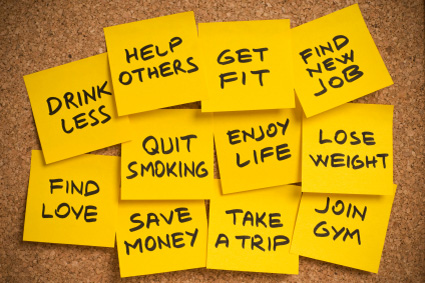
newyearresolutionResolutions rarely come with a plan. They are typically announced (even to ourselves) as a platitude. “This year I will… lose 40lbs, start my own business, quit smoking, spend more quality time with my family, etc.” These are well intentioned statements that, when not accompanied by a detailed plan, can put huge pressure on an individual. They are also highly unlikely to be achieved which leaves us feeling like losers.

Resolutions should also, like any goal, be set using SMART guidelines. SMART stands for Specific, Measurable, Attainable, Realistic, and Time Bound.

Specific is the details of the goal. If your goal is to lose weight, how much and how are you going to accomplish that. I will lose 40lbs by creating an exercise routine that consists of 30min of cardio and 30min of weight lifting three times per week. I will also track my calories using myfitnesspal app and stay within my allotted calorie range.

Measurable, is that specific goal measureable? Well, the more specific it is, the easier it is to measure. Did you workout or not? Did you track your calories or not? Having said that, it may be a better choice to not be black and white about it. Give yourself a percentage ranking for the tasks. I worked out twice this week instead of three. So, I scored 66%. Now, what can you do to get yourself to 100%?

Attainable is a reality check. Is this something you can actually achieve? We can achieve most things, but if I were to say that I wanted to play pro basketball (at age 59), it is highly unlikely that I can make that happen.

Realistic, Well, this has always bugged me a little. It’s really the same idea as Attainable. Is this goal realistic? Honestly, having been born and raised in Maine, I prefer to go with the Maine version. Mainers would pronounce smart “smat” (dropping the r sound) which works just as well as a goal setting guideline.

Time bound is simply putting a deadline on reaching your goals. Without a deadline, it becomes easy to put things off. As the  Parkinson’s law states, “work expands so as to fill the time available for its completion”. The longer you give it, the longer it takes and with no deadline, it will unlikely get done at all.

Our resolutions should also come with a strong and detailed Why. Why is attaining this goal so important to you. Why is this goal important to you? Losing weight is not about looking better or being healthier. It might be about feeling more self confidence when you feel you look better or it may be about being healthier so that you will live long enough to see your grandchildren grow up. Write dow the real, deeper reason why your goal is important.

To top off our chances of success, we should have someone that we are accountable to. Maybe you ask a friend or family member to help keep you on task. Check in as often as you need, but set a regular schedule. Every day at 8pm, or every Monday at 7am. You could even set a time that you check in with yourself. The key is to set a time to objectively evaluate how you are doing.

So, if you want to win at the resolution game, be SMART, know your why, and be accountable for your meeting your steps toward your goal.