There are great doctors and there are awful doctors. There are doctors in-between. Just like any other profession. Of course, there are doctors that are great in some areas and lousy in other areas. The problem is knowing which your doctor is.
Just the other day, a client in her mid-sixties came to me after injuring her wrist. She said that when she went to her doctor, the doctor told her to stop lifting weights, which, for her wrist at the time, would not have been unreasonable. However, the doctor then followed up with, “Why would a woman your age want to lift weights anyway?” I was taken back that this opinion still exists in the medical community. My client said that she wasn’t going to be swayed by her doctor and that she knows the importance of strength training as we get older. (Phew!)
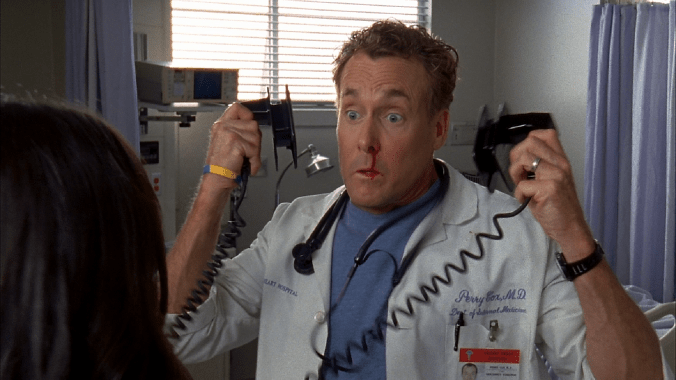
A scene from “Scrubs”
Now, even the best doctors can’t stay current on all areas of human health. As a fitness professional, I know that there is new research every day and that it takes work on my part to stay up with the most current information. Because there can be new studies that could potentially disprove what I “know”, I understand that I can be proven wrong and am happy to change my position if enough evidence supports it. Good doctors will do the same.
So, my suggestion to you when you believe your doctor is mistaken, is to find the research to back up what you believe is correct. Present that information to your doctor ask to discuss it with him or her. If they are not willing to discuss it, maybe you should look for a doctor who will. There is a caveat to this though, don’t just take what you find on Facebook or what Dr. Oz says to be as good as scientifically supported information. Use credible sources. Here’s a pretty good list of sources for accurate health and medical information. RefSeek’s guide to the 25 best online resources for medical reference Remember, doctors are not infallible. Don’t fear questioning them. Be your own advocate.
*By the way, here’s some research on strength training as we get older: “Current research has demonstrated that strength-training exercises have the ability to combat weakness and frailty and their debilitating consequences. Done regularly (e.g., 2 to 3 days per week), these exercises build muscle strength and muscle mass and preserve bone density, independence, and vitality with age. In addition, strength training also has the ability to reduce the risk of osteoporosis and the signs and symptoms of numerous chronic diseases such as heart disease, arthritis, and type 2 diabetes, while also improving sleep and reducing depression. – The benefits of strength training for older adults. Am J Prev Med. 2003 Oct;25 (3 Suppl 2):141-9. Seguin R1, Nelson ME.
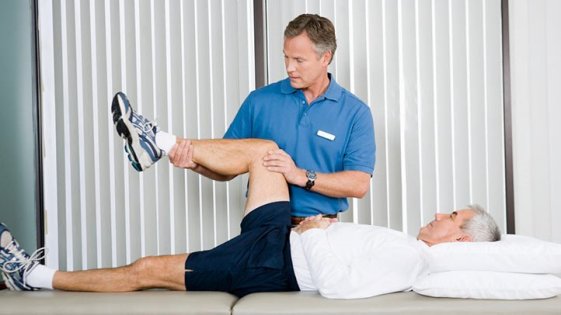 Problem #1: Let’s assume you get injured on the job. Your primary care physician refers you to a physical therapist for treatment. The therapist takes you through various rehabilitation modalities that will most likely included some exercises that you will perform. Insurance only pays for “X” number of visits and then you’ll need to continue on your own. More often than not, you do not follow through with your therapy exercises. Without that follow through, the your physical level will begin to decrease from the point when you left physical therapy. This deconditioning sets you up to get injured again.
 Any exercise program will give results to someone who hasn’t been exercising. It doesn’t mean it is the safest, most effective exercise program. It is just that now you’re following a program and doing some kind of exercise.
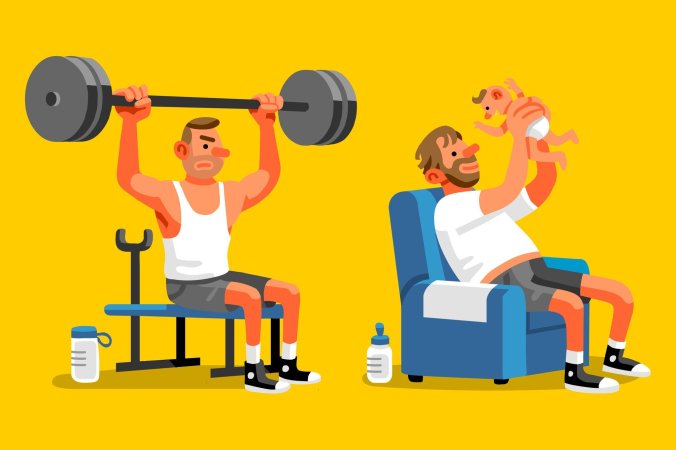 So, what is a dad bod? In a recent article from the New York Times,
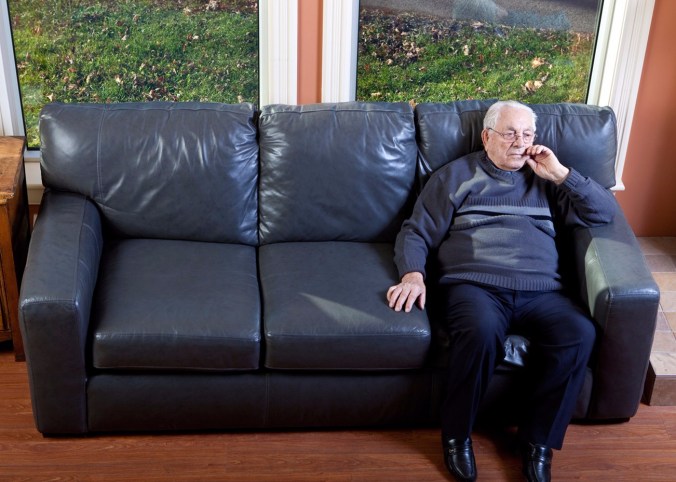

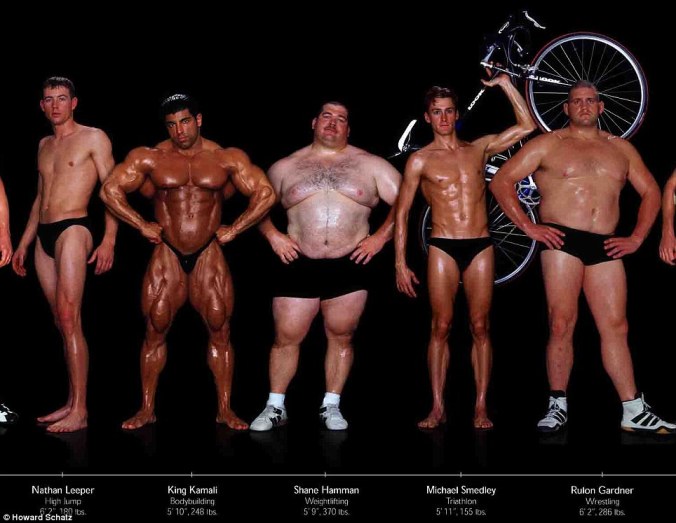
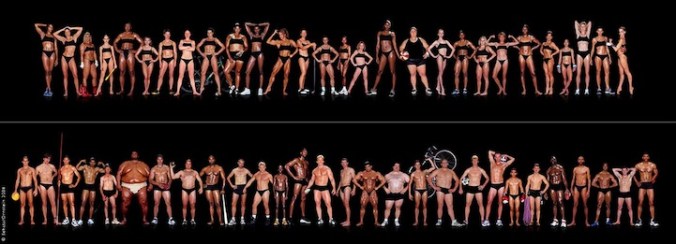 The catch is that this doesn’t mean sit around and eat whatever you want. You still have to workout and eat healthfully. That’s what is going to help you get/stay fit (to do whatever it is that you want to do) and healthy by getting all of the nutrients you need for your body to function properly. But, you don’t need to look like a fitness model. Be fit, be healthy, but also be happy in knowing that fitness comes in all shapes and sizes.
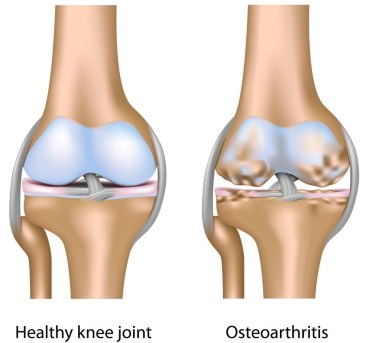 and helps it glide through movement, wears down and/or is damaged, it leaves the joint with bone grinding against bone. This can cause pain, swelling and problems moving the joint. This is osteoarthritis. There are many of us that will experience osteoarthritis as we get older. It is a degenerative condition that can be caused or made worse by aging, injury, or pressure from excess body weight. Needless to say, when our joints hurt, we move less. That used to be the recommendation from the medical community as well. If it hurts to do something, then don’t do it. Unfortunately, that’s not what current research shows. The less we move the joint, the weaker the surrounding muscles become and, the weaker they become, the more stress is on the joint. This ongoing stress only makes the pain and discomfort worse.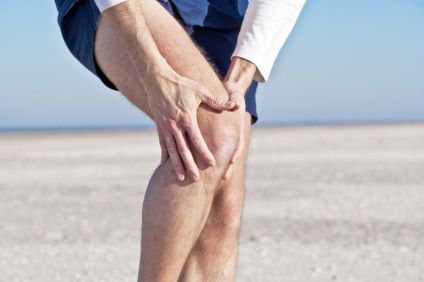

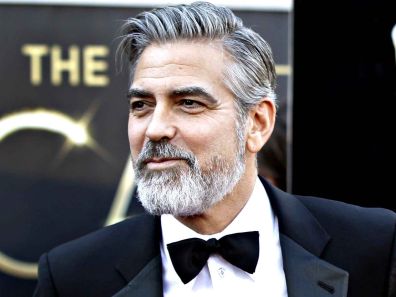 I’m slowly but surely losing my hair. I have a few more wrinkles every year. I have a few more aches and pains as time passes. I’m not thrilled by any of these changes. I could obsess about them. I could take every product known to counteract them, but I know I will never be as good looking or even have the hair of George Clooney. Well, George Clooney should not be who I benchmark myself against, and yet, the media and businesses trying to sell us products hold those unrealistic icons up to us and try to convince us that this is perfection and we should be trying to achieve this too.
 Fitness: Fifty and Beyond