Keeping Your Brain Fit

As we age, there are changes that occur that we typically expect to face. These might include some hearing loss, impaired vision, and general aches and pains. These are annoyances for the most part and not things that need to diminish our quality of life to any great extent. However, for many, a big fear and source of anxiety is the possibility of suffering from Alzheimer’s or some other form of dementia. Alzheimer’s is the sixth leading cause of death in the US and the second most feared (after cancer). Who could blame fearing it? It can rob us of our memory to the extent that we don’t remember our loved ones, and, to date, there is no cure for it. That said, there are things we can do to keep our brains as healthy as possible for as long as possible. Brain fitness programs have been explored to help people maintain healthy brain tissue and function.
fit_brainThere are five main elements that we can engage in to help our brains working optimally.

  1. Physical exercise has been shown to improve blood flow to the brain, as well as stimulate the production of brain derived neurotropic factor (BDNF) which has been described as “Miracle Grow for the brain”.
  2. Proper nutrition, healthy foods in healthy amounts (especially those high in omega 3 and antioxidants) helps to keep the brain’s tissues functioning optimally.brainfitness-elements
  3. Cognitive challenge is essential and more than just doing crossword puzzles and Sudoku. Look for learning opportunities that involve multiple senses such as learning to play an instrument or learning to speak another language.
  4. Stress management can have a big effect on our lives. Stress elevates cortisol levels (stress hormone) which, if it is chronic, can destroy brain cells making it harder to remember and think clearly. Try activities that can reduce stress such as exercise, meditation, or other things that draw your attention away from your stressors.
  5. Socialization is also important. Studies have shown that people with many social connections, that they interact with on a regular basis, experience a slower rate of memory decline.

These elements of a brain fitness program don’t need to be addressed separately. In fact, one of the best things you can do is to layer various elements together. Fitness classes are a great example of the possible layering, exercise, cognitive (following and/or learning choreography), stress reduction, and socialization with others in the class. Another example could be taking an Italian cooking class where you also learn Italian (cognitive, socialization, possibly nutrition). As I think about it, there’s a very popular one at the moment, the social painting classes (socialization, cognitive, stress reduction).

We can make a difference in our brain’s health and function. The mind is a terrible thing to waste. (I think I heard that someplace 🙂 ) Don’t let yourself slide into mental decline if it can be prevented or even delayed. Try to integrate these 5 elements into your life. Mix and match them. They are what make life richer and help keep it that way.



Eating to Build Muscle

Building muscle, whether young or old, keeps us able to do the things we want in life. That may be playing sports or carrying groceries. It also, being a more metabolically active tissue than fat, helps us keep fat off. The more muscle we have, the higher our resting metabolism, which means we burn more calories at rest than someone with less muscle. Now, to build muscle, we need to challenge them so they need to adapt and grow. This is most effectively done through resistance training (i.e. weight lifting). Most of us understand that. What a lot of people don’t know is that eating the right foods in the right portions is equally important.

Let’s start where everyone’s mind goes first, protein. Protein, by itself, does not build muscle! Resistance training stimulates muscle growth. However, if you don’t have adequate protein to help with tissue synthesis and repair you will not gain muscle and will likely even lose it.

natural-protein-650x250

So, how much protein do we need? Often, the RDA (recommended daily allowance) is looked at for guidance. You would think that would make sense, right. But, the RDA is about surviving, not thriving. They are minimal allowances. To build muscle, we need more. Alan Aragon, nutrition researcher and educator, in his book with co-author Lou Schuler, The Lean Muscle Diet, recommends 1 gram of protein per pound of Target Body Weight (TBW). So, say you weigh 240 pounds and wish to weigh 200, 200 lbs is your TBW. That means that you should eat 200 grams of protein per day. This is equivalent to 2.2 grams per kilogram, almost 3x the RDA which only recommends 0.8 grams per kilogram. Now, Aragon is not being age specific with his proposal. Yet, several studies that looked specifically at older adults, recommend increased protein intake from 0.8 to between 1.2-1.5 grams per kilogram, still less than Aragon’s. I believe (yes, this is me giving you a judgement call) that, from all of the research I have read and presentations that I have been to, the amount of protein for muscle gain (thriving, not surviving) lies on the higher end of the spectrum, probably between 1.8 and 2.2 grams per kilogram.

Now, muscle-building nutrition is also more than just about protein. We need adequate carbohydrates and healthy fats AND … enough total calories. If we are eating too few calories our bodies may turn to our muscle to break down into fuel. Obviously this is counter productive if we are trying to gain muscle. I’ve worked with many, so-called, hard gainers (those that can’t seem to gain muscle). More often their difficulty stems from one of two things or a combination of both. Either they are not challenging themselves appropriately with their weight lifting program or they are not eating enough to support muscle growth.

Quick approximation of Daily Caloric Needs (DCN): there are many formulas to determine DCN and all are ballpark guesses. I tend to start with the Harris-Benedict equation to determine the resting or basal metabolic rate (BMR) add in activity level and thermogenic effect of  food. Then I will tweak it up or down as we monitor results. You can use this link to get you started – Harris-Benedict calculator. Take your BMR number and multiply it by your activity level (1.2 for couch potato – 1.75 for high-end athlete). Now add in 10% of your BMR for the thermogenic effect of  food. This will give you an approximation of your DCN.

If you want to gain muscle at any age you need the growth stimulus (resistance training) and the support for growth by getting enough protein and total calories. Now go put on some muscle!

Building Muscle After 50

In a recent article in the New York Times, Can You Regain Muscle After 60, author Gretchen Reynolds discussed research done in which “men and women in their 60s and 70s who began supervised weight training developed muscles that were as large and strong as those of your average 40-year-old.” This is important because what keeps us able to do what we want as we age, is muscle. Strength, power, and your resting metabolism depend on gaining, or at least not losing, muscle. So, how do we do that?

karl-on-deck

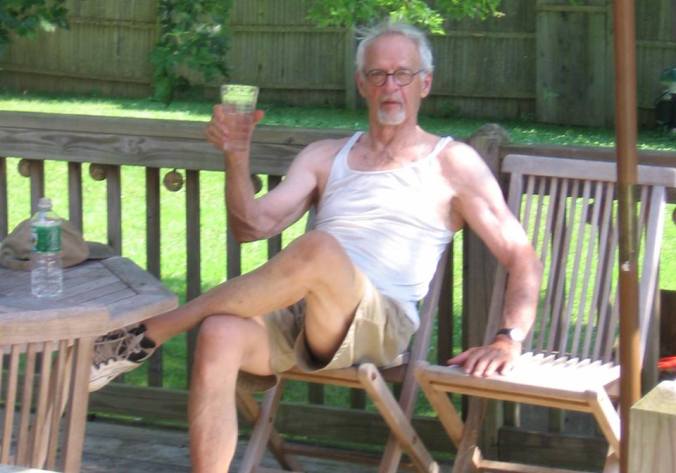
Metal sculptor, Karl Stirner at 82 years old

Let’s start with the idea of not losing what you have. In a previous post, How Many Years Do You Have Left?, I mentioned sarcopenia, or the physical declines that come with muscle loss. Sarcopenia is predominantly caused by a lessening of physical activity as we get older. One of my favorite examples of someone not slowing down as he got older, was my father-in-law, Karl Stirner. Karl was a metal sculptor (he passed early in 2016 at the age of 92). He hauled iron around on a daily basis until he was almost 90. His strength always amazed me. That continued physical activity kept him young and physically capable of living life on his terms. The same can be true for you. If you are physically active, stay that way. If you’ve had a physical job all of your life and you find yourself retiring or changing jobs, find other ways (maybe more fun ways) of staying active.

What if you’ve never been never been active or worked out or it’s just been a really long time since you have? You need to start to build muscle. The best way to do this is resistance training. This includes free weights, machines, tubing, body weight, etc. As long as the exercise is challenging to you within a general repetition range of 8 – 20 repetitions, it’s going to help you build strength and muscle. However, start small, start light. With the prospect of doing this for the rest of our lives, we can take our time building the intensity and the volume of the program. This will help minimize the risk of injuries. I will often only give 5 or 6 exercises to someone just starting out. One set of 12 repetitions for each of the exercises on day one and then see how they feel the next day. If they are not too sore and have no issues, we can start to progress the program. Ultimately, the program has to become very challenging or you won’t have enough stimulus to build muscle.

Finally, you need to support muscle growth by eating enough calories and enough of those calories coming from protein. That will be my next post. In the mean time, know that you can (and should) build strength and muscle no matter what your age.  If you’re doing it, keep doing it. If you’re not, get started. It’s never too late.

Please, if you have any questions, feel free to ask them in the comments.

The Challenges of Working Out at Home

Recently, I was asked by a fitness professional and health and fitness writer friend of mine (Linda Melone) to explain some of the challenges of doing home workouts. I thought that this would be something I could add a little more depth to here.

Working out at home seems like a perfect solution for many people. There are no crowds, no travel, only music that you like, etc., which is true of course, however, it’s never that simple. Here’s a partial list and explanation of some of the drawbacks of trying to work out at home.

  1. You bought the equipment, but don’t really know what to do with it. Not having a well-constructed program will cause you to pause and to pause is to put off, possibly indefinitely. Hire a certified personal trainer to create an individualized program that you can follow.
  2. You bought the equipment, but people often think they will get the workout in when they get a break in their daily routine. Unfortunately, things come up (Phone calls, chores, kids, pets, etc.) and the workout never happens. Don’t assume the window of opportunity will magically appear. Schedule your workouts ahead of time and stick to the schedule. Treat it as an appointment that you must keep.
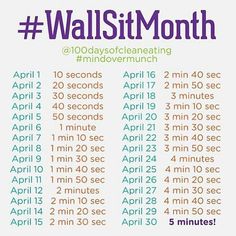
  3. You think you will simply follow a program you found on the internet. Well, the challenge here is that the program is not specifically for your needs/wants and, while it might be difficult to do, it may be completely inappropriate for you and your goals. It could also be dangerous or just plain pointless. I found this wall-sit workout online. The only sane reason for possibly doing it would be if your old high school rival challenged you to a “sit off”. Then, well, maybe there’s a reason for doing it. What’s the answer? Once again, hire a certified personal trainer to create an individualized program that you can follow. wallsitmonth
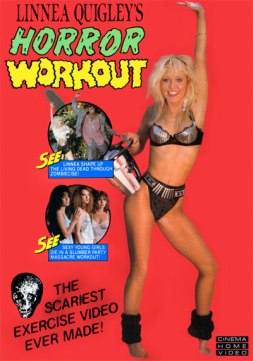
  4. You bought an exercise video to use at home. Just because someone produced a video, doesn’t mean they know what they are doing. Even some fitness celebrities are grossly misinformed. Also, as with videos from the internet, it may be completely inappropriate fhorroworkoutor you. If you want to use a video, at least get a recommendation from a certified personal trainer.
  5. Sticking to a program at home can be challenging. At a club you develop friendships that help to keep you accountable. At home, it’s just you reporting to you. To stay on track, use a calendar to check of the days you completed your workout. Reward yourself when you reach a certain goal, such as after 20 workouts you reward yourself with a massage.
  6. Another reason people don’t stick with their program is that they become bored and/or they plateau. The biggest culprit here is doing the same program without change. Of course it becomes boring and less productive. Every 4-6 weeks, rehire your personal trainer to create a new workout for you with new exercises and new progressions. This will help keep you interested and the gains will keep coming.

Home workouts can and do work for many people. If you want to be successful at it, start by engaging a certified personal trainer to create a program based on your own individual needs and goals. (This can be with whatever equipment you may have, just body weight, or they may recommend specific equipment you should have.), create a workout schedule and stick to it, and have the trainer come back to revamp your program every 4-6 weeks.

Good luck.


Aging and Flexibility

Flexibility, as with any aspect of fitness, if you don’t use it, you lose it. And, as we age we tend to challenge our full range of motion less and less which allows our muscles, tendons, and fascia to tighten. Our decrease in going through full ranges of motion may stem from injuries, arthritis, or simply becoming more sedentary.

tying-shoes

“You know you’re getting old when you stoop to tie your shoelaces and wonder what else you could do while you’re down there.” – George Burns

If an injury has got you moving less, get it checked out by your doctor. Do what you need to get it fixed or let it heal, then gradually stretch the area to regain any lost mobility.

Arthritis, and the pain associated with it, can definitely cause us to move less and through smaller ranges of motion. The guidelines, however, whether it’s rheumatoid arthritis or osteoarthritis, are to exercise through as full a range of motion as is tolerable. This includes working through pain. Contrary to what many people believe, a well-designed and performed exercise program will not make the arthritis worse. The result is actually less pain overall and greater strength, stability, flexibility and function of the joint.

Loss of mobility from being sedentary is common because many people are less active as they get older. It’s lost over time and it will take time to regain it, but you can regain it with work.

So, when it comes to aging and loss of flexibility, know that with some stretching and strengthening, you can improve what you have lost and possibly regain it all.

Become a Push Up King at Any Age

Push ups have long been a standard for assessing strength, muscle endurance, stroking egos, and now even serving as a way to bring attention to the 22 veterans that commit suicide every day (started by a group Honor Courage Commitment). One of the big reasons is that it is great exercise that challenges the chest, shoulders, triceps, and core muscles and requires no equipment. The problem is that if you are just starting out with strength training, your body weight will probably be too much to do an effective push up. Even modified (from your knees) push ups may be too much. Well, there’s another way to create  the push up progression that’s right for you.

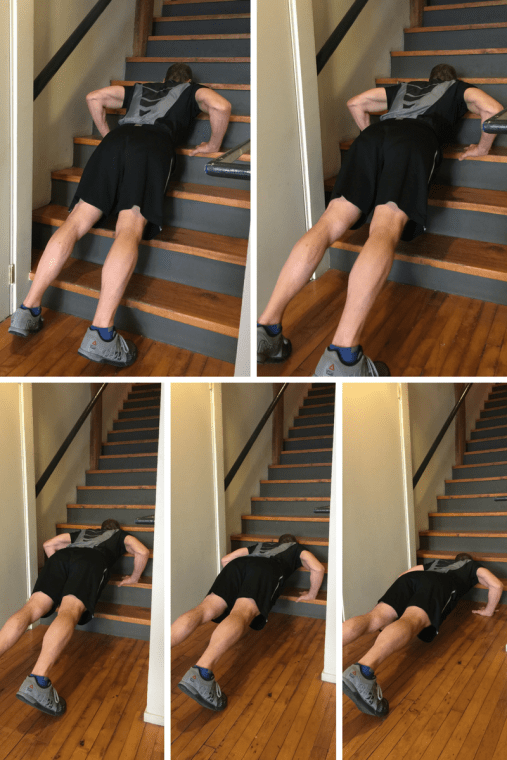
It’s about the angles. Without getting into the physics of it, the more inclined your body is, the less you are directly opposing gravity and the easier the movement is. So, by adjusting the body angle, you can select the challenge level that is appropriate for you.

untitled-design-7

Start your push up program at a staircase, with your feet close to the bottom step. Lean forward and reach out placing your hands on the step that allows your body to be in a strong, straight plank position. Space your hands so they are just outside of shoulder width. Pick a target number of repetitions that you want to be able to do on the floor (let’s say 22). See how many push ups you can do at this angle. Do one set of as many as you can every day (yes, you can do them every day). When you can do 22 reps, move to the next step down on the staircase. With each completion of 22 reps, continue the progression to the next step until you are doing them off the floor. Et voila! Push up king!

Of course you don’t have to stop there. Once you are doing full push ups on the floor, you could then go back to the steps and start working on your one-arm push ups.

Day 1: Taking Stock

Before we know what we need to change, we need to know what we are doing. Unlike going on the new popular diet, a lifelong solution to health and fitness is finding changes that we can sustain. It’s about tweaking what we are currently doing until it meets our needs. So, how far off that mark are we?untitled-design-12

From a dietary standpoint that means we need to do a diet diary. Many people like to use the app myfitnesspal (myself included). Lose It is another highly rated diet tracker. For three days simply enter what you eat and don’t worry about any particular goals. We’re just trying to see where we stand at this point. From there we can look at our calories and macronutrients and make changes as needed. (I’ll get into more nutritional specifics in a later post.)

As for exercise, we want to measure not just what we do (or don’t do) in the gym, but also how much we move around all day. While there are some great tracking devices like Garmin Vivosmart HR+ ($219.99) and Fitbit Charge 2 ($149.95), they can out of the price range for many people. LifeHacker recommends the free smartphone app Moves for tracking walking, running, cycling as well as mapping your route. If you don’t have a smartphone and don’t want to spend the money for the high-tech options, you can pick up a simple pedometer such as the highly rated Ozeri 4x3sport Tri-Mode Activity Tracker ($19.45). Once we evaluate our current activity level, we have established a level to improve upon.

Now, of course there are many more elements that we could measure and establish as a baseline, such as weight, body composition, cardiovascular endurance, strength, flexibility, etc. These are great to have, but sometimes finding the qualified individual to take you through these assessments can slow you down and act as a barrier to getting started. The diet and activity levels can be easily done on our own.

Remember that we can’t map our journey toward reaching our goals if we have no idea where we are starting. Establish your starting point and from there you can chart your progress.

Got Back Pain?

In all likelihood you have experienced back pain at some point in your life, especially if you are over 50. Here are a few quick facts about back pain:

  • Low back pain is the single leading cause of disability worldwide.
  • One-half of all working Americans admit to having back pain symptoms each year.
  • Back pain is one of the most common reasons for missed work.
  • 80% of the population will experience a back problem at some time in their lives.
  • Americans spend at least $50 billion each year on back pain

backpain

According to the Mayo Clinic, risk factors for back pain include:

  • Age. Back pain is more common as you get older.
  • Lack of exercise. Weak back and core muscles can lead to back pain.
  • Excess body weight puts extra stress on your back.
  • Diseases. Some types of arthritis and cancer can contribute to back pain.
  • Improper lifting techniques can lead to back pain.
  • Smoking can keep your body from delivering enough nutrients to the disks in your back.

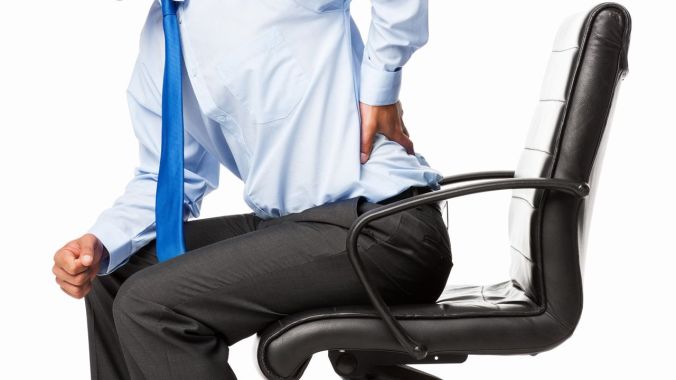
So, where do we start to reduce back pain? See your doctor first! Get a diagnoses to establish if there is any risk to starting a core strengthening program. (Yes, the core is where your training should begin.)

The first exercise for most individuals (everyone’s case is different) is to learn and practice core bracing. This is where you draw in the waist as if you are trying to fasten pants that are a bit too tight. This girdling creates pressure inside the abdomen which, in turn, supports the low back. Because this exercise supports the back and doesn’t bend and/or rotate the spine, it can usually be done with no harm to the back. You need to practice this to both strengthen the core muscles and to be able to call on that strength when needed.

In my experience, one of the best ways to “find” this bracing is to sit on the edge of a chair and then, while keeping your face straight forward, push the top of your head toward the ceiling. I call these “sit-talls” because that’s what you’re trying to do, sit as tall as you can. In order to be tall, you need to lengthen your spine. To do that, you need to draw in your navel toward your spine and that is the core bracing.

Once you learn what bracing is and how to do it, other static (non-movement) exercises can be incorporated to get you started on the road to better back function with less discomfort.

Let me know if you have any questions.

Mark


I’ve Got the Power!

Snap, “I’ve got the power.” came to mind as I was thinking about power training. Oh, and how many of you remember Power Man, the super hero that recently made a comeback on Netflix’s “Luke Cage”? hmmn? I digress… The point is power. Did you know that power training is one of the most important things you can do as you get older? Let’s back up and start by defining what is meant by power. Power is Force x Distance divided by time or… for the rest of us, it’s not just how much weight we can move from one point to another, but also how fast. So, power training has speed as a key component. Why is that important to train as we get older? There’s research that suggests that power is even more closely associated with a person’s ability to perform activities of daily living than even strength. Well, strength is just one part of power and not only is it important to be able to move weight (like your bodyweight), but also to move it quickly.

untitled-design-13

Power is also relative. We don’t need to be able to dunk a basketball, but if we want to play sports, acceleration is power. That acceleration may be swinging a golf club or throwing a kick in martial arts. It’s also being able to get out of the way of an oncoming car, or react quick enough to not fall when we’re off balance.

Power training is about utilizing explosive exercises. This can take many forms including jumps or throws. A cautionary note, however, power movements are high-intensity and having a proper progression to keep you safe and maximize your results is essential. Work with a certified personal trainer to make sure you’re on the right track.

Is power training part of your program? Let me know what kinds of things you’re doing in the comments below.

How Many Years Do You Have Left?

As a personal trainer, I’ll ask clients what their goals are and occasionally I get an answer like, “At my age, I’ll be happy if I can just go up and down the stairs without getting winded.” Then I’ll look back down at their medical history and see that they are only 52. This always prompts me to ask, “How many years do you think you have left?” Usually they will say they hope to live into their 80’s or 90’s. Well that’s thirty to forty years to go. What are those years going to look like? Are you going to spend twenty years in a walker or a wheelchair? That doesn’t sound like much fun. Just because we’ve hit 50 (or 60, or 70…) doesn’t suddenly mean that we are done, that we are no longer physical beings.

The truth is that we have been conditioned by what has come before. In our parents era, it was believed that we would lose a certain % of our muscle and flexibility and gain a certain % of fat every decade beyond our twenties. Pretty depressing. Well, the truth is that we would see those declines when we slowed down and didn’t continue to challenge ourselves physically. Think about it. We finished playing our sports in high school and college, got a 9-5 job, got home after work and just wanted to relax. As we did less, we are able to do less. It truly is “use it or lose it.” The good news is that most of what we saw as age related declines (also called sarcopenia) were because of the activity decreases and that does not need to be our fate. Whether you have been on that downward slope or just want to make sure you stay off that path as long as you can, the right exercises and diet can keep you fit and able to do what you want well into our final years.

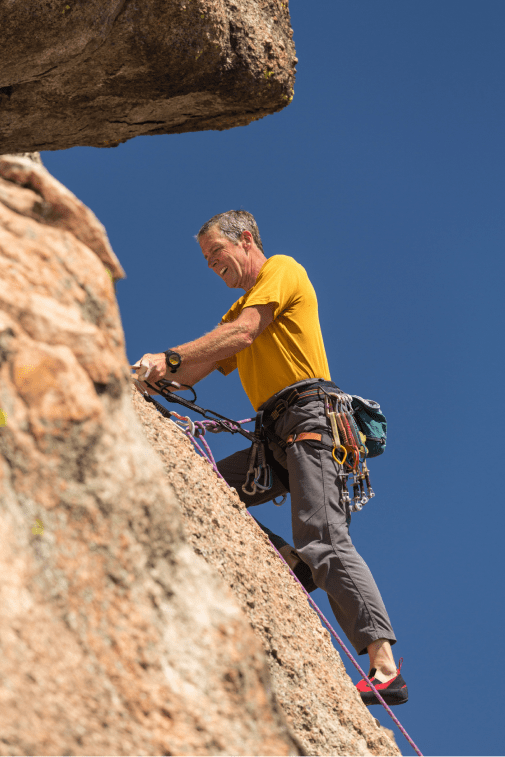
Back to the original question, how many years do you have left? Here’s the follow up question, of those years, how many of them would you like to still be able to do what you want and enjoy? You can choose how you want those years to play out. Don’t settle for climbing stairs when you can climb mountains.

untitled-design-8